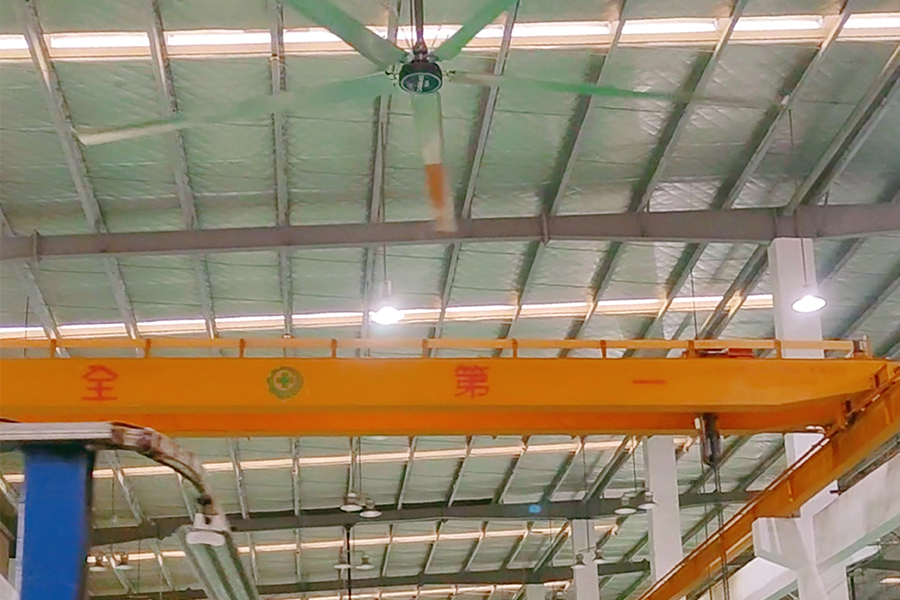
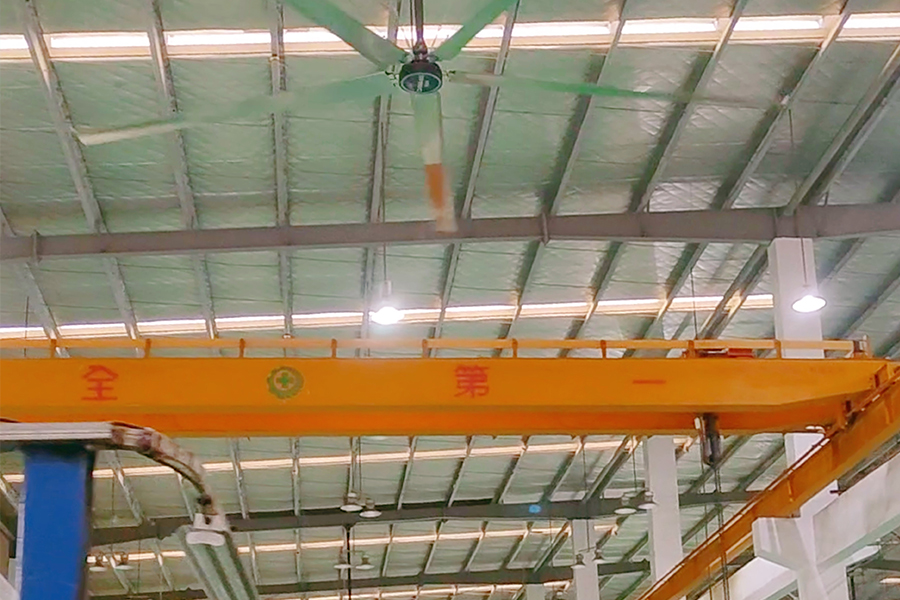
In summer, when stepping into a steel‑structured factory building, many people encounter a paradox: working on the ground is manageable, but climbing up to the second‑floor platform or the crane operator’s cab feels stiflingly hot and suffocating. This isn’t an illusion—it’s… Thermal stratification 。
1. All the heat is trapped on the rooftop.
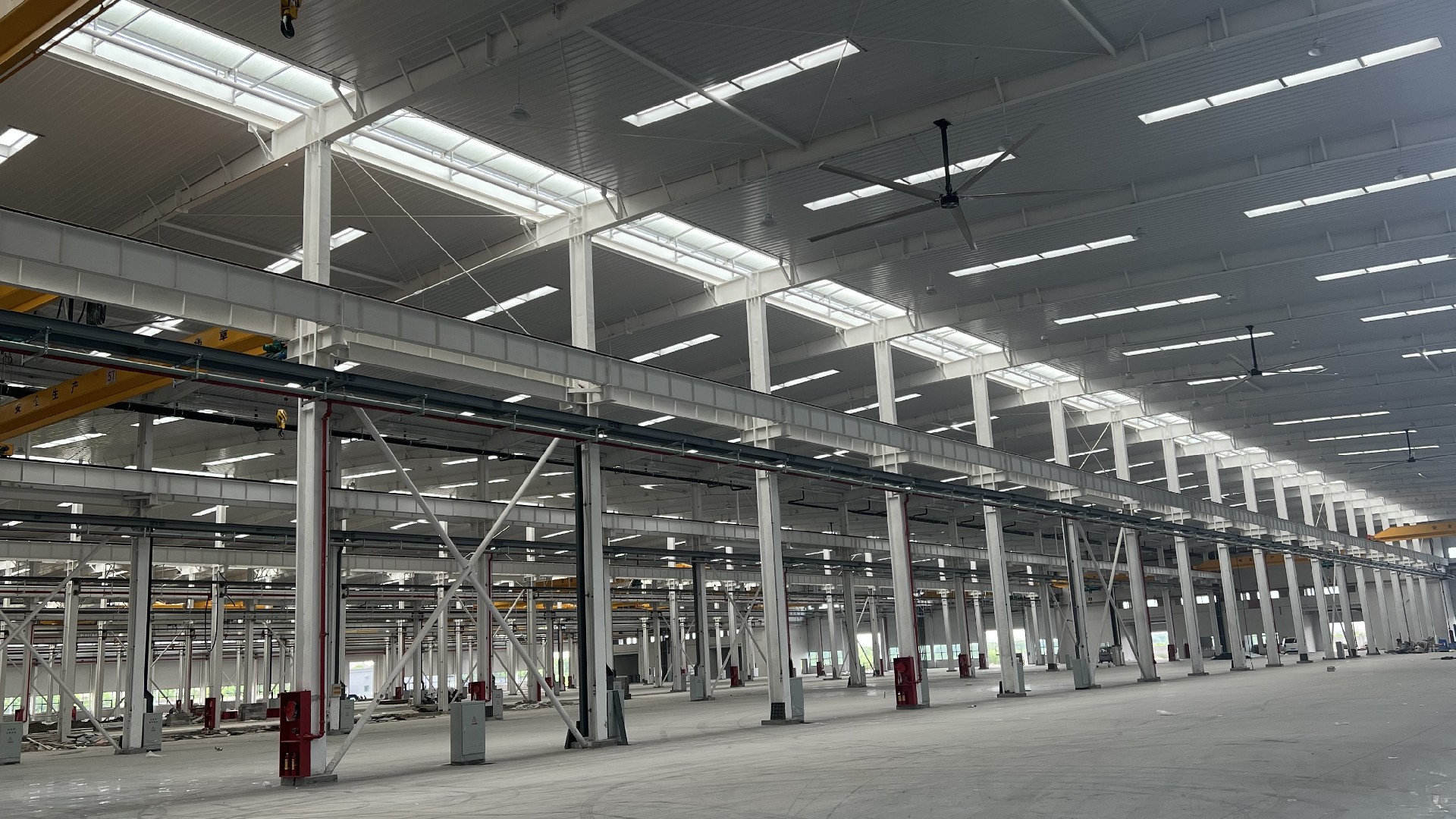
Hot air is less dense and rises. In factories with ceiling heights of 8 meters or more, the roof surface can reach temperatures far higher than those at ground level under prolonged exposure to intense sunlight, causing heat to accumulate near the top. The temperature difference between the upper and lower levels often exceeds 10°C. In other words, a significant portion of the electricity you pay for—and the heat dissipated by your equipment—ends up being wasted, lingering on the roof.
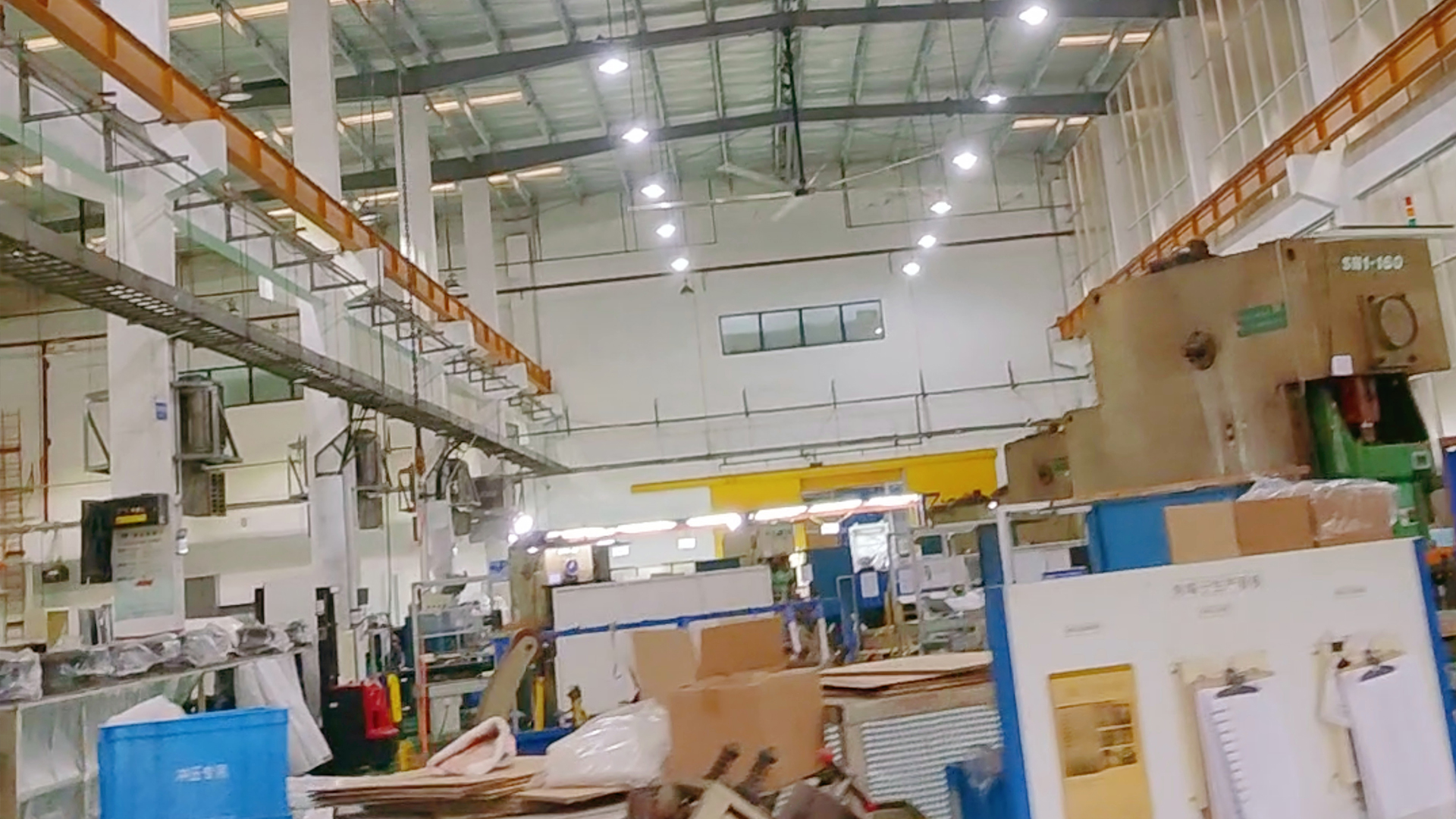
The problem with traditional wall-mounted mini fans is their “point-to-point” design: they deliver airflow only where they’re aimed, leaving other areas stiflingly stuffy; and at high speeds, they can stir up dust from the floor, making the experience even worse.
II. HVLS Solution: High Airflow, Low Rotational Speed
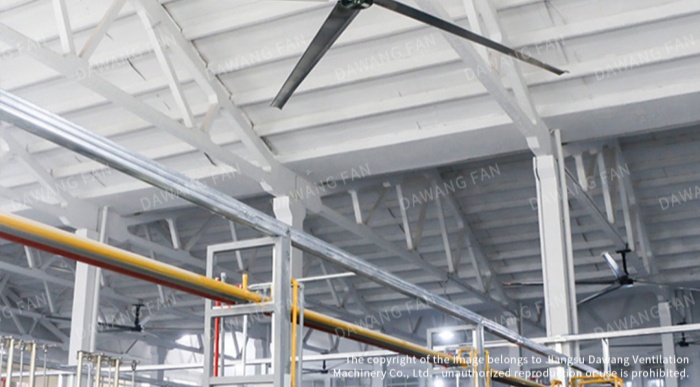
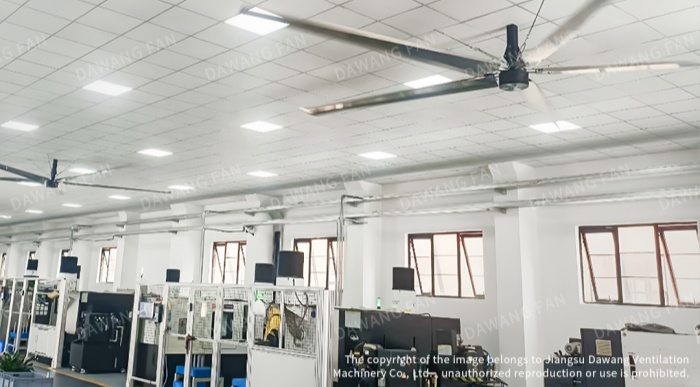
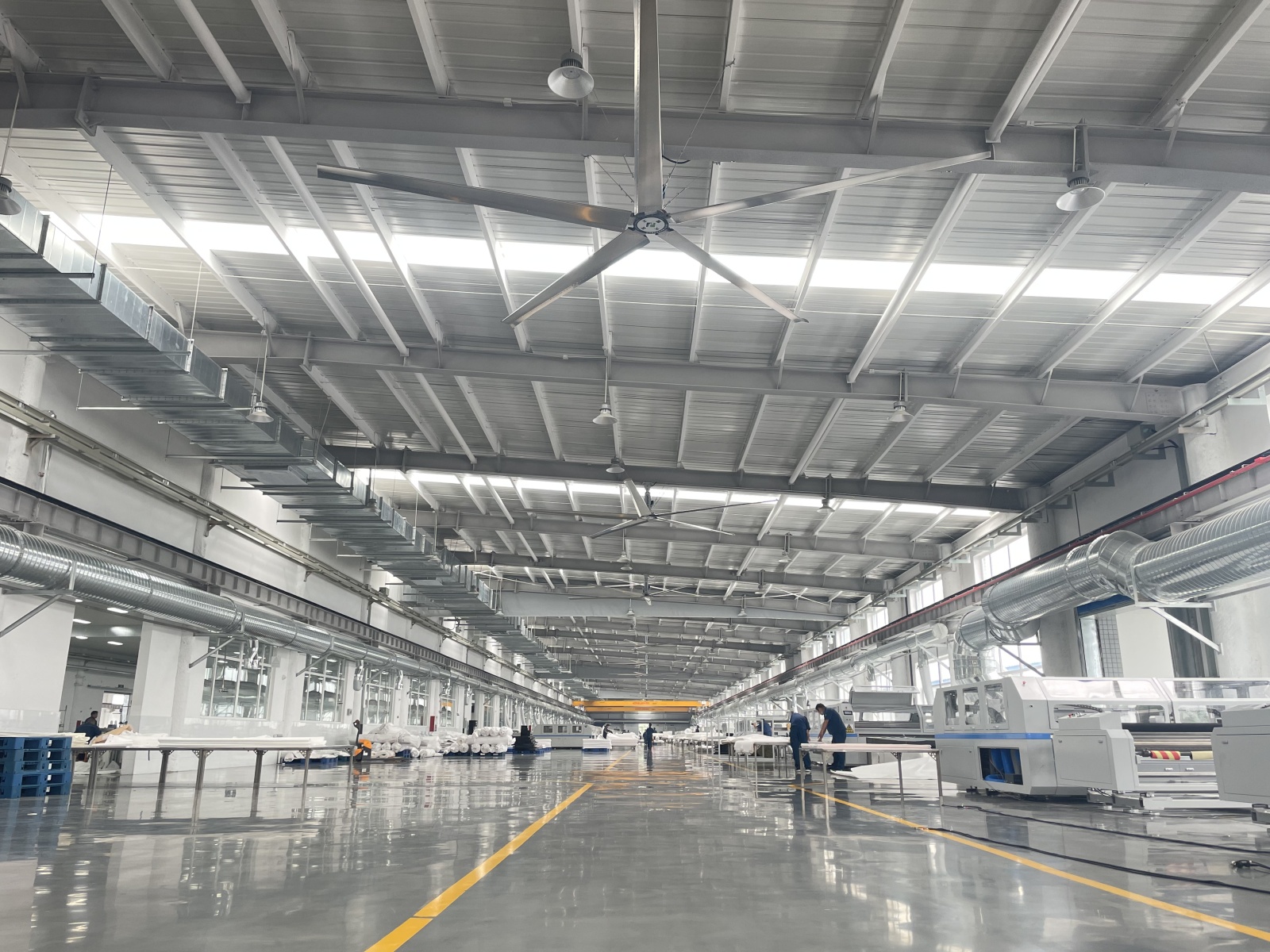
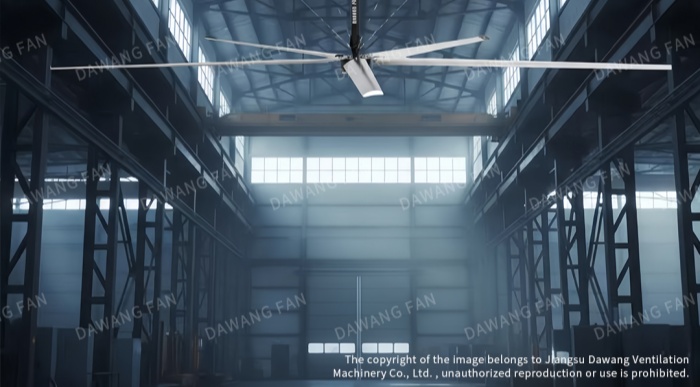
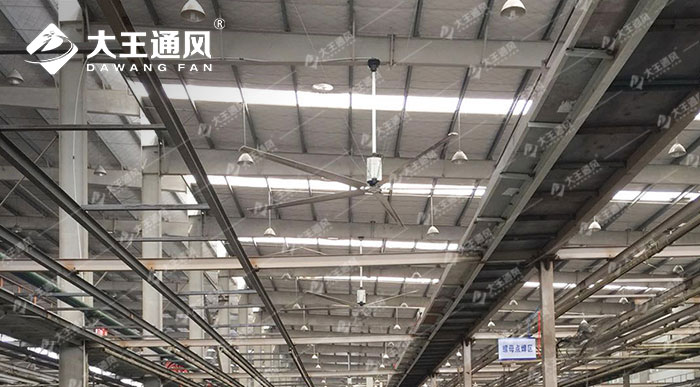
HVLS (High Volume Low Speed) operates on a completely different principle— With extra-large-diameter fan blades, it drives a massive volume of air to flow gently. 。
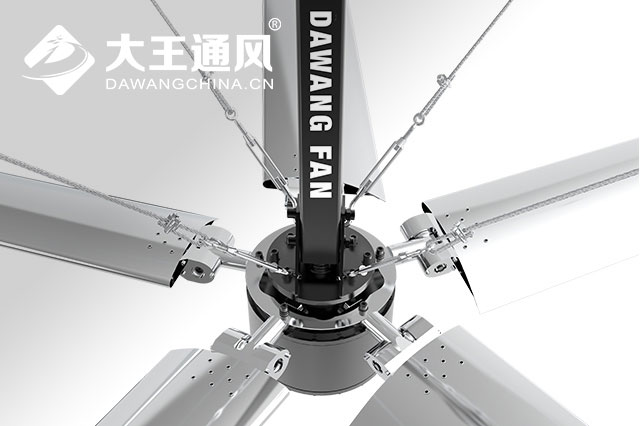
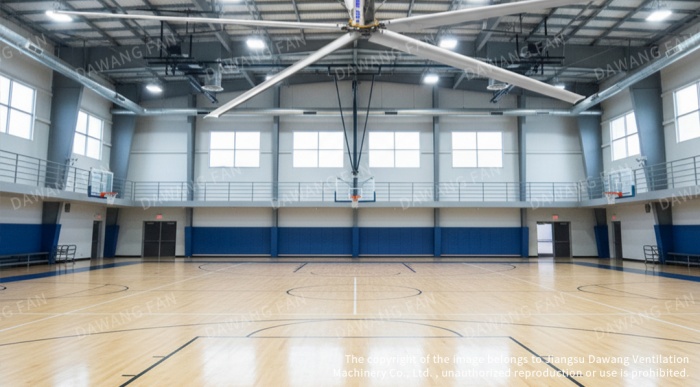
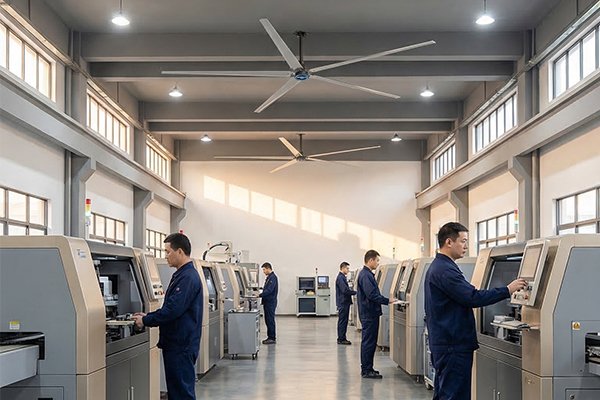
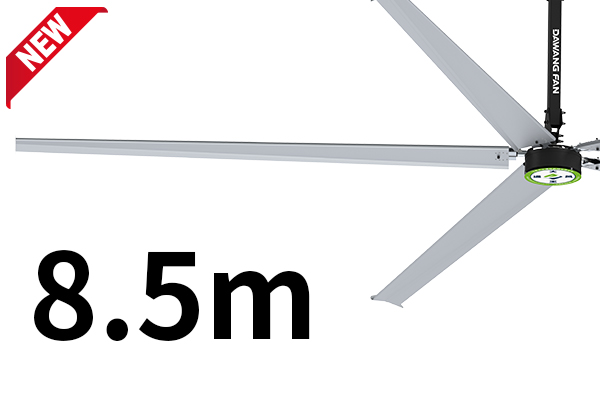
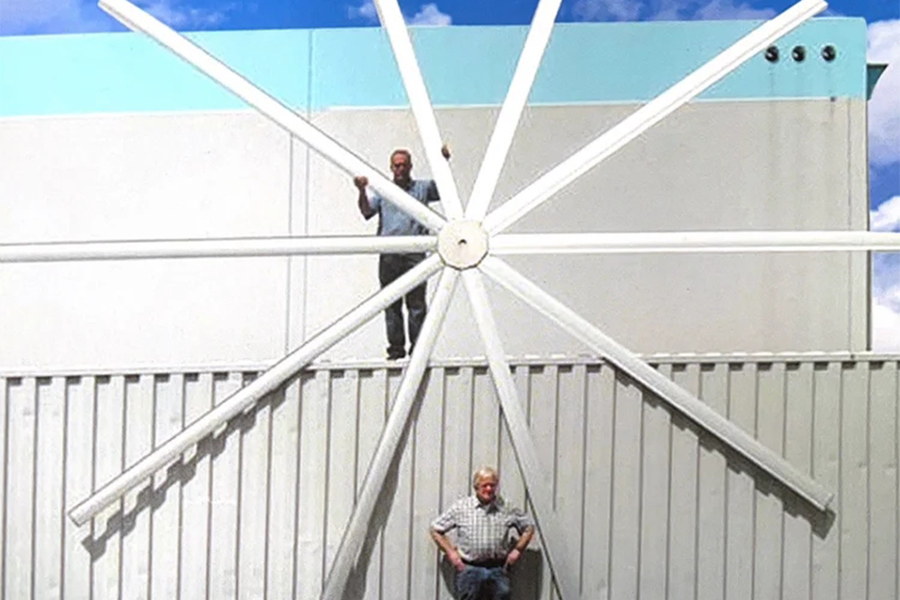
The Dawang Ventilation W28 features fan blades with a diameter of 8.5 meters, yet operates at a rotational speed of only a few dozen RPM. Its full‑load airflow can reach 21,800 m³/min, generating a conical column of air that spreads downward and outward throughout the space. This airflow skims along the floor, then rises along the walls to return to the roof, drawing down the hot air trapped near the ceiling and mixing it with the cooler air below—thereby eliminating temperature stratification at its source. With stratification eliminated, warm air can flow smoothly out through doors, windows, and ventilation towers.
III. Cooling Doesn’t Rely on “Blowing Cold Air”
HVLS itself does not produce cold air; its cooling effect comes from… Accelerate the evaporation of human sweat A steady, gentle breeze of 1–3 m/s gliding across the skin can provide a perceived cooling effect of about 5–8°C, closely resembling the natural breeze under tree shade, while avoiding the joint discomfort and dust‑raising issues associated with high‑speed fan blasts.
IV. Calculating Energy Consumption Costs
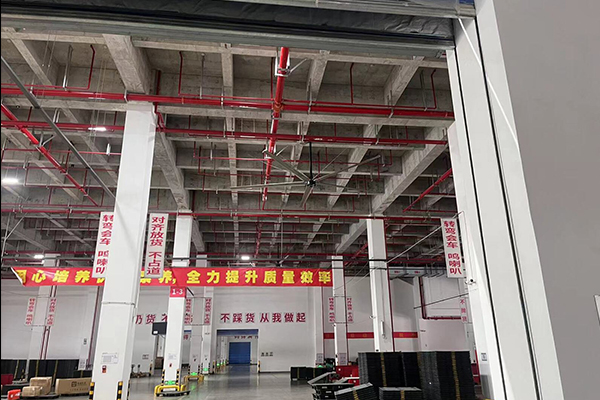
An 8.5-meter‑class large fan consumes approximately 1.5 kW/h and can cover an area of over 1,800 m² per unit. By contrast, covering the same area with wall‑mounted small fans would require dozens, or even hundreds, of units, resulting in higher total power consumption, more extensive wiring upgrades, and greater ongoing maintenance costs.
It is not a substitute for central air conditioning: the large fan first eliminates temperature stratification and reduces the loss of cool air rising upward, allowing the air conditioner’s set temperature to be raised and further lowering overall energy consumption.
V. When selecting equipment, these four factors are more important than airflow volume.
Check the ceiling height. : Recommended for spaces 4.5 meters or larger, with open areas and minimal obstructions; in partitioned spaces, a small auxiliary fan can be used in conjunction.
See the power : Compared with conventional induction motors, PMSMs—permanent‑magnet synchronous motors—offer higher efficiency, lower noise, and maintenance‑free operation. All models in the Dawang ventilation series meet the IE4 energy‑efficiency standard.
View Security : With the equipment suspended at a height of over ten meters, the connection structure, wire ropes, and fall‑protection design are the true safety底线; the W28 is equipped with 12 layers of safety safeguards.
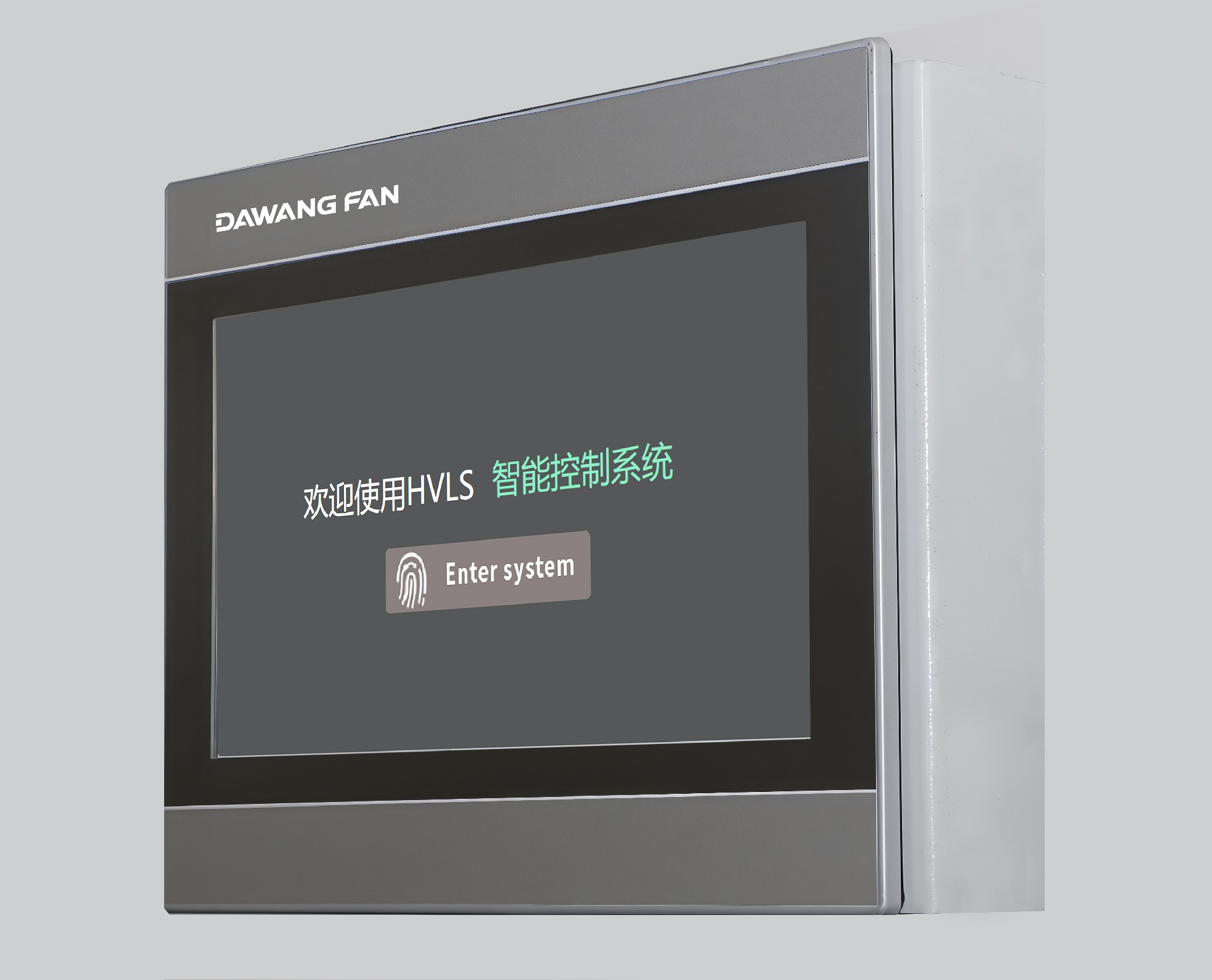
View Management DAWANG BOX control system supports centralized one-touch management of up to 48 units, mobile remote monitoring, and real-time fault alarms, enabling ventilation equipment to be integrated into the factory’s digital management system.
Founded in 2015, Dawang Ventilation is a national-level high-tech enterprise that has successfully passed an in-depth factory audit by TÜV Rheinland. The company holds more than 45 patents, exports its products to over 40 countries and regions worldwide, serves nearly 10,000 customers, and offers a comprehensive 4S maintenance and service system that covers the entire lifecycle of its equipment.
Your Majesty, may the world be bathed in a gentle spring breeze.