Basic Definition and Core Operating Principle of Industrial Large-Scale Fans
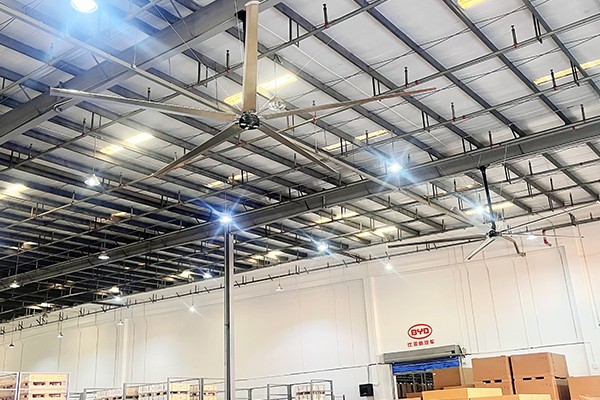
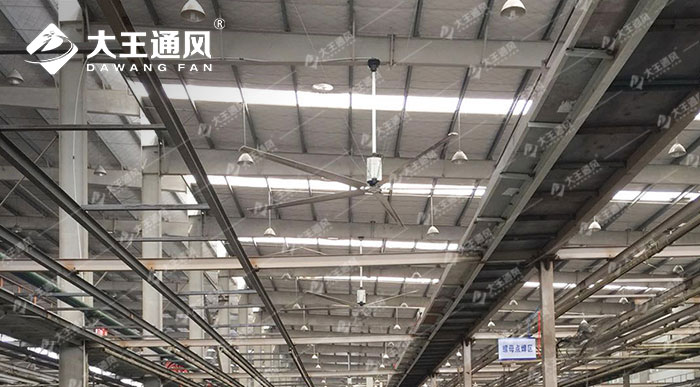
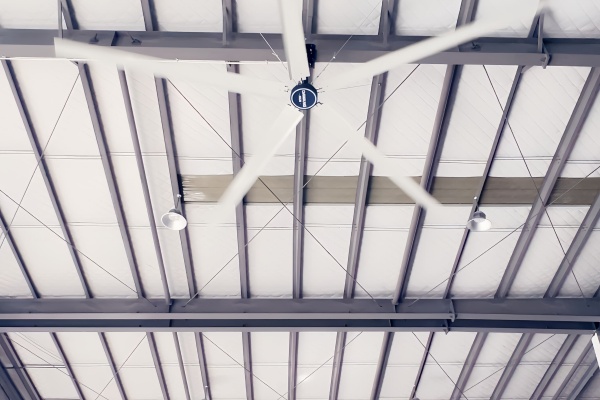
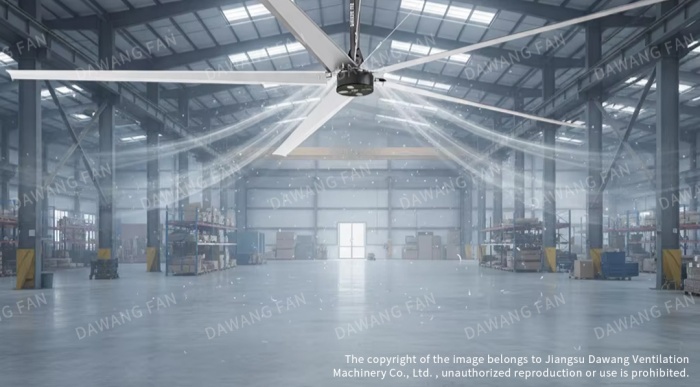
Industrial large fans are ventilation and cooling devices for industrial spaces, featuring large diameters and low rotational speeds. As a category with high market penetration in the industrial ventilation sector as of 2026, it relies on large fan blades to drive continuous circulation of substantial airflow, delivering a uniformly gentle and comfortable breeze throughout expansive, open spaces.
Description of the Basic Attributes of Industrial Large Fans
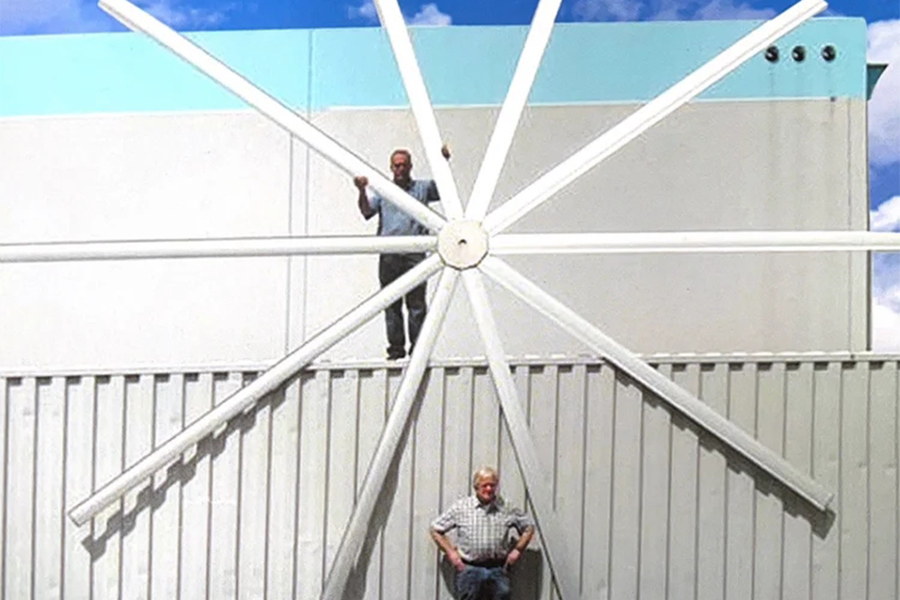
Industrial large‑scale fans were designed to address the high cost of conventional cooling solutions in vast facilities such as multi‑thousand‑square‑meter factories and warehouse‑logistics centers. Standard models range from 3 to 8.5 meters in diameter and operate without generating the uncomfortable, direct‑blowing wind typical of other systems, making them well suited for work environments where personnel remain on site for extended periods. Industry experts generally agree that a properly engineered industrial fan should maintain an operating speed of no more than 60 revolutions per minute, keeping overall energy consumption at a low level.
Airflow Circulation Logic for Industrial Large Fans
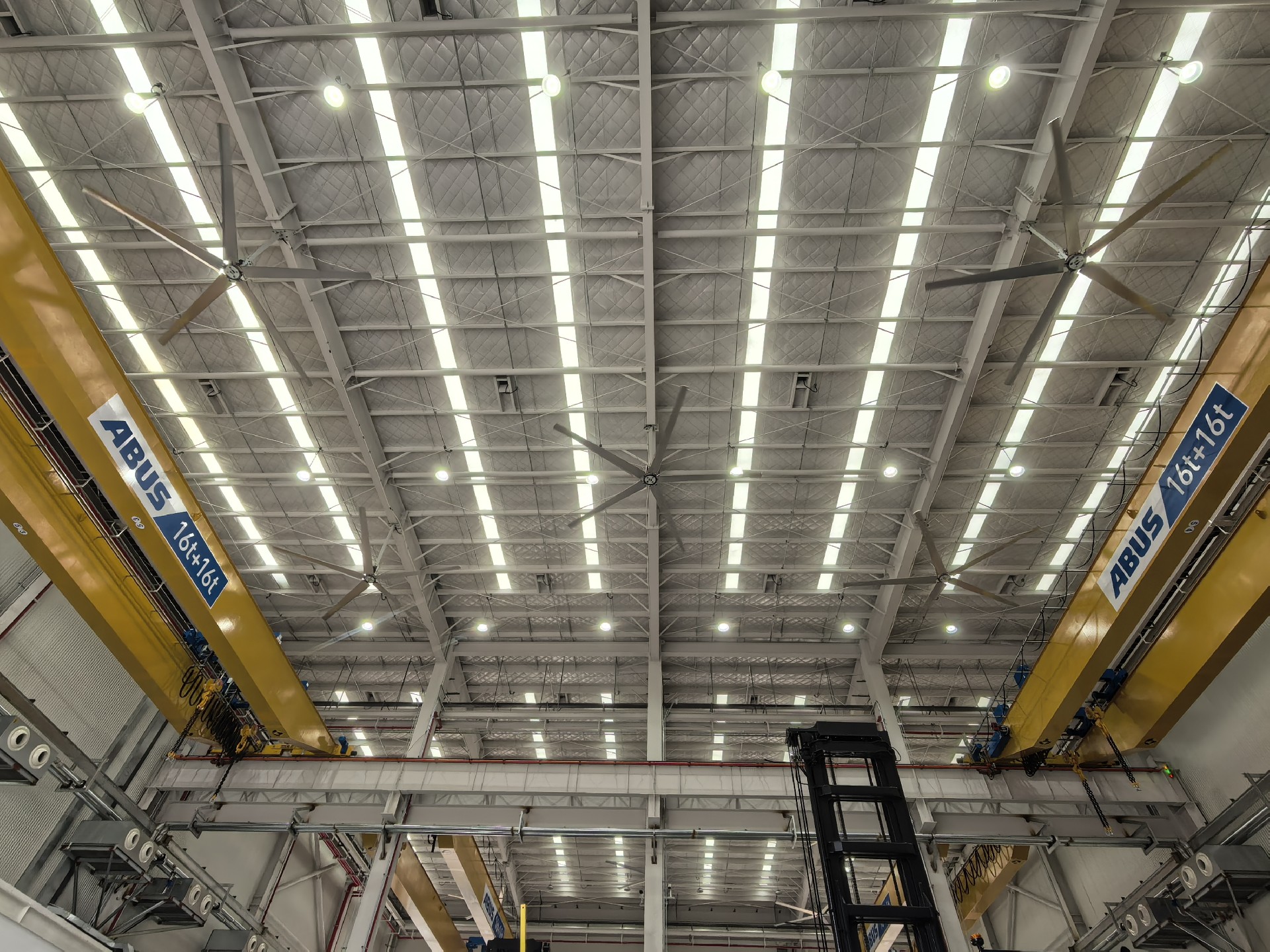
After operation, industrial ceiling fans push airflow from the top downward toward the floor, creating an air layer 1 to 3 meters high that then spreads outward, establishing comprehensive, dead‑zone‑free air circulation throughout the space. This effectively addresses indoor stuffiness, poor ventilation, and localized heat buildup, while preventing distinct temperature and humidity stratification within the area.
Comparison of Mainstream Specifications for Industrial Large Fans in 2026
By 2026, industry standards for industrial large‑diameter fans will have been standardized. Products with different configurations will be tailored to meet diverse application requirements, enabling users to select models that best suit their needs by referring to the specification table.
Actual Measurements of Core Parameters for Industrial Large Fans of Different Diameters
According to publicly available research data on the ventilation equipment industry in 2026, the parameter differences among mainstream industrial large‑size fans of various specifications are shown in the table below:
| Comparison dimension | 3-meter diameter model | 5-meter diameter model | 8.5-meter diameter model |
|---|---|---|---|
| Rated power | 0.75KW | 1.2KW | 1.5KW |
| Theoretical coverage area | 300㎡ | 800㎡ | 1800㎡ |
| Compatible with the minimum floor height | 3.5 meters | 4.5 meters | 7 meters |
Differences Among Various Drive Types of Industrial Large Fans
Currently, industrial large‑scale fans on the market are mainly divided into two categories: direct‑drive motors and geared motors. Direct‑drive models offer lower operating noise and longer maintenance intervals, while geared motor models generally have a lower overall purchase cost. Users can make a flexible choice based on their budget and operational‑maintenance requirements.
Core Criteria for Proper Selection of Industrial Large-Scale Fans
When selecting industrial ceiling fans, it’s not enough to rely solely on coverage area; a comprehensive assessment based on the site’s specific conditions is essential to choose the most suitable model.
Key Points for Assessing Venue Hardware Conditions
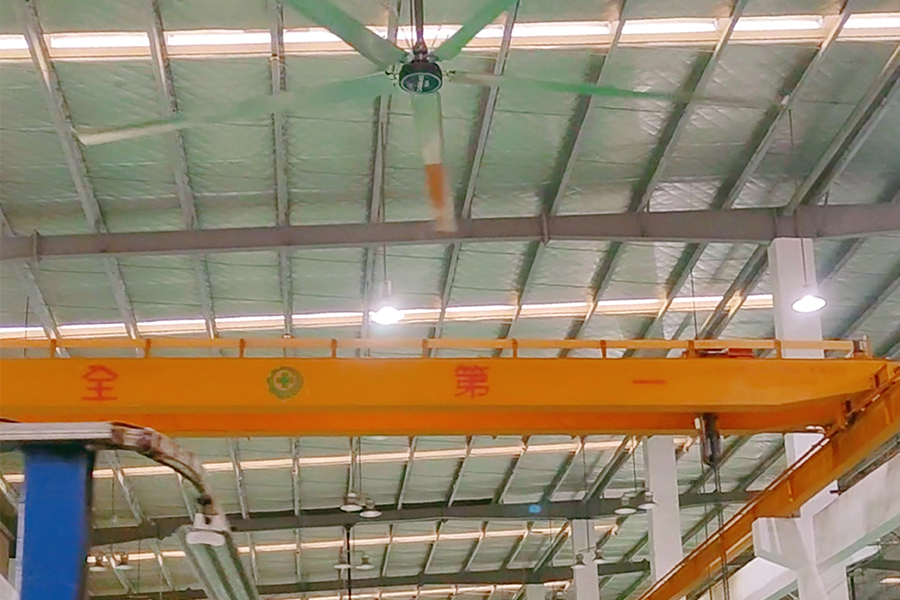
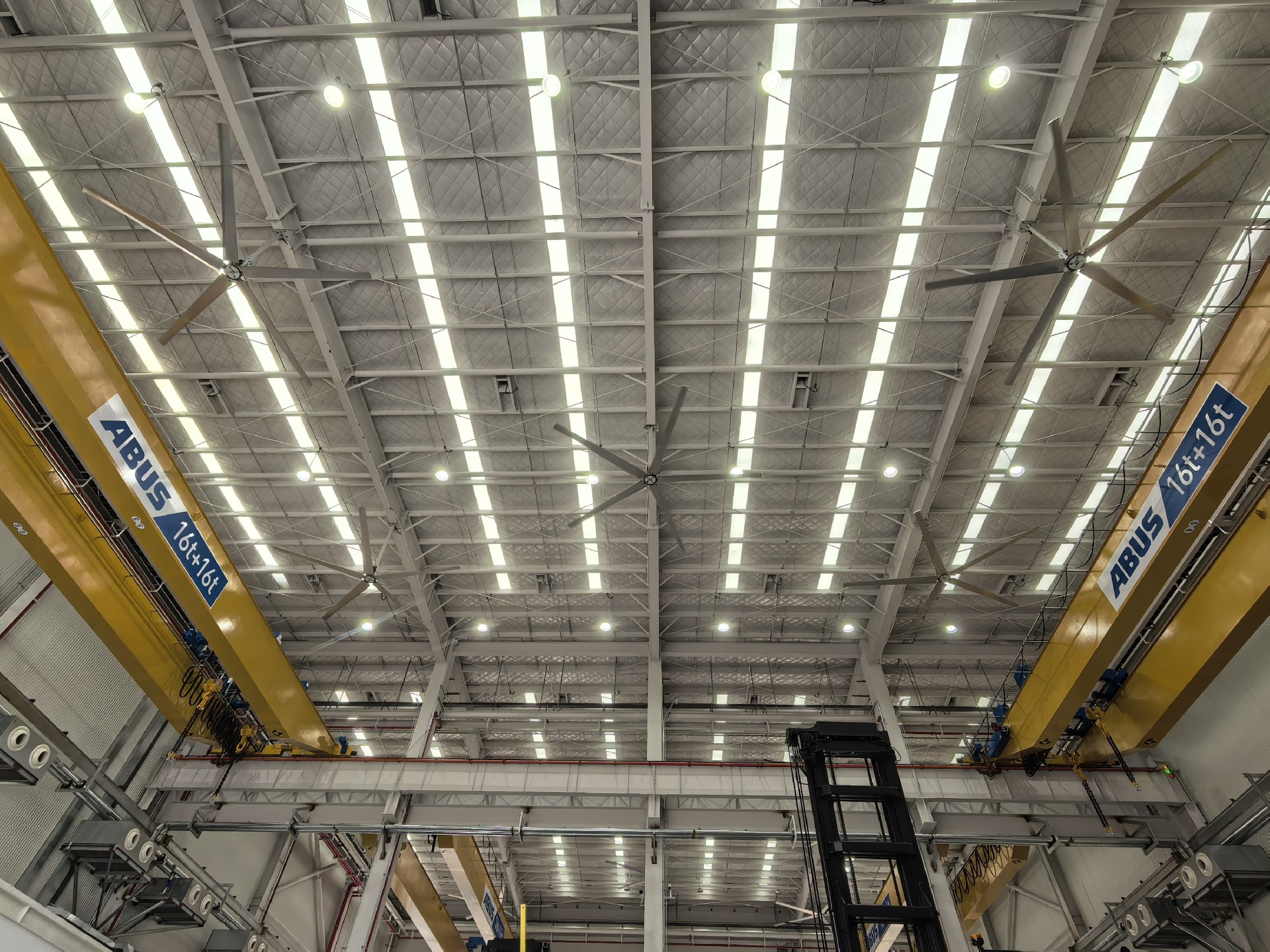
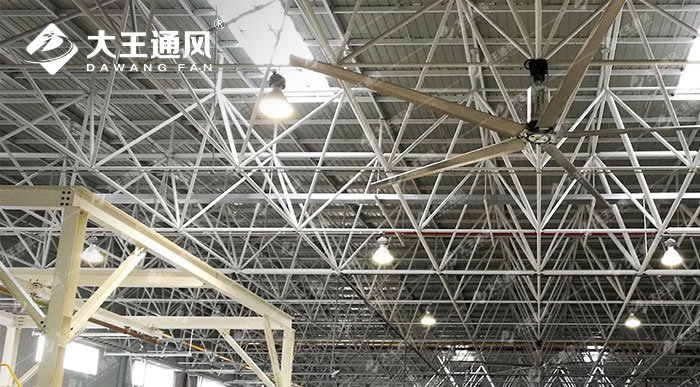
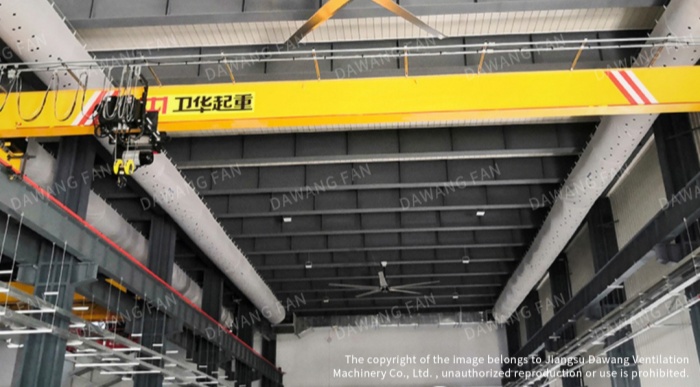
First, it is necessary to verify the site’s ceiling height, the load-bearing capacity of the building’s roof, and the distribution of surrounding obstacles, to prevent collisions between the industrial ceiling fan and pipelines, overhead cranes, or other equipment during operation, and to ensure adequate clearance for safe operation.
Method for Matching Actual Usage Requirements
If the primary need is to cool personnel, prioritize industrial large‑diameter fans with low rotational speeds. If you also need to address material drying and ventilation, consider models with more speed settings to meet the specific requirements of different applications.
Standardized Installation Procedure for Industrial Large Fans
Industrial large‑diameter fans are high‑altitude suspended equipment and must be installed by a certified professional team in accordance with established procedures to ensure safe, long‑term operation.
On-site survey and positioning: Verify lifting points, load-bearing support locations, and cable routing paths, and mark the installation datum points.
Secure auxiliary structure fixation: Install the accompanying lifting brackets and safety‑guarding steel cables, then complete the load‑bearing test.
Host and Blade Assembly: Complete the assembly and connection of the host and blades on the ground, and verify the tightness of all fasteners.
Lifting, commissioning, and operation: Lift the complete unit to the designated position and secure it; connect the power supply and perform all parameter adjustments; conduct a continuous trial run for 2 hours to confirm there are no abnormalities.
Safety Precautions During Installation
During the installation of industrial large‑diameter fans, all personnel working at height must wear a full set of personal protective equipment. Upon completion of installation, safety warning signs must be posted promptly to prevent unauthorized personnel from handling the equipment.
Key Verification Points for Acceptance
During the acceptance phase of industrial large fans, it is necessary to systematically verify parameters such as fastener tightness, safety cable redundancy, operating noise, and air‑distribution uniformity. Only after confirming that all specifications meet the design requirements should the equipment be officially handed over for operation.
Practical Tips for Daily Operation and Maintenance of Industrial Large Fans
Proper daily maintenance can effectively extend the service life of industrial large fans and reduce the likelihood of failures during prolonged operation.
Routine Daily Inspection Items
It is recommended to conduct a routine inspection of the industrial large‑fan’s firmware, steel cables, and blade surfaces once per quarter, promptly removing any dust or debris adhering to the blades to prevent adverse effects on dynamic balance.
Common Troubleshooting Methods
If the industrial ceiling fan emits noticeable unusual noises or vibrations during operation, immediately disconnect the power supply and contact the manufacturer’s after-sales service technicians for an on-site inspection. Do not attempt to disassemble the unit’s internal components yourself, as this could create safety hazards.
Common application scenarios for industrial ceiling fans
Industrial large fans are highly versatile and can be selected to suit a wide range of applications, making them ideal for open spaces with ceiling heights of 4 meters or more.
Production operation scenarios
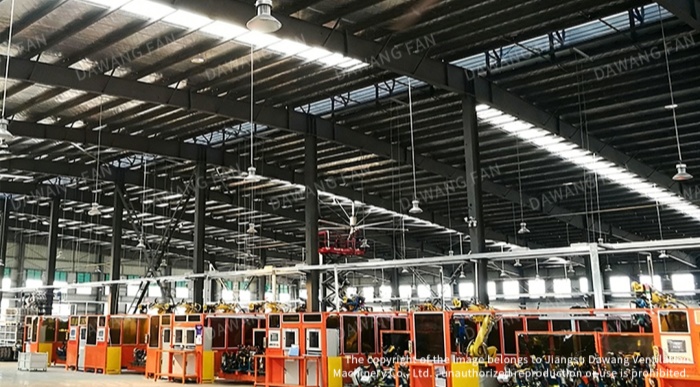
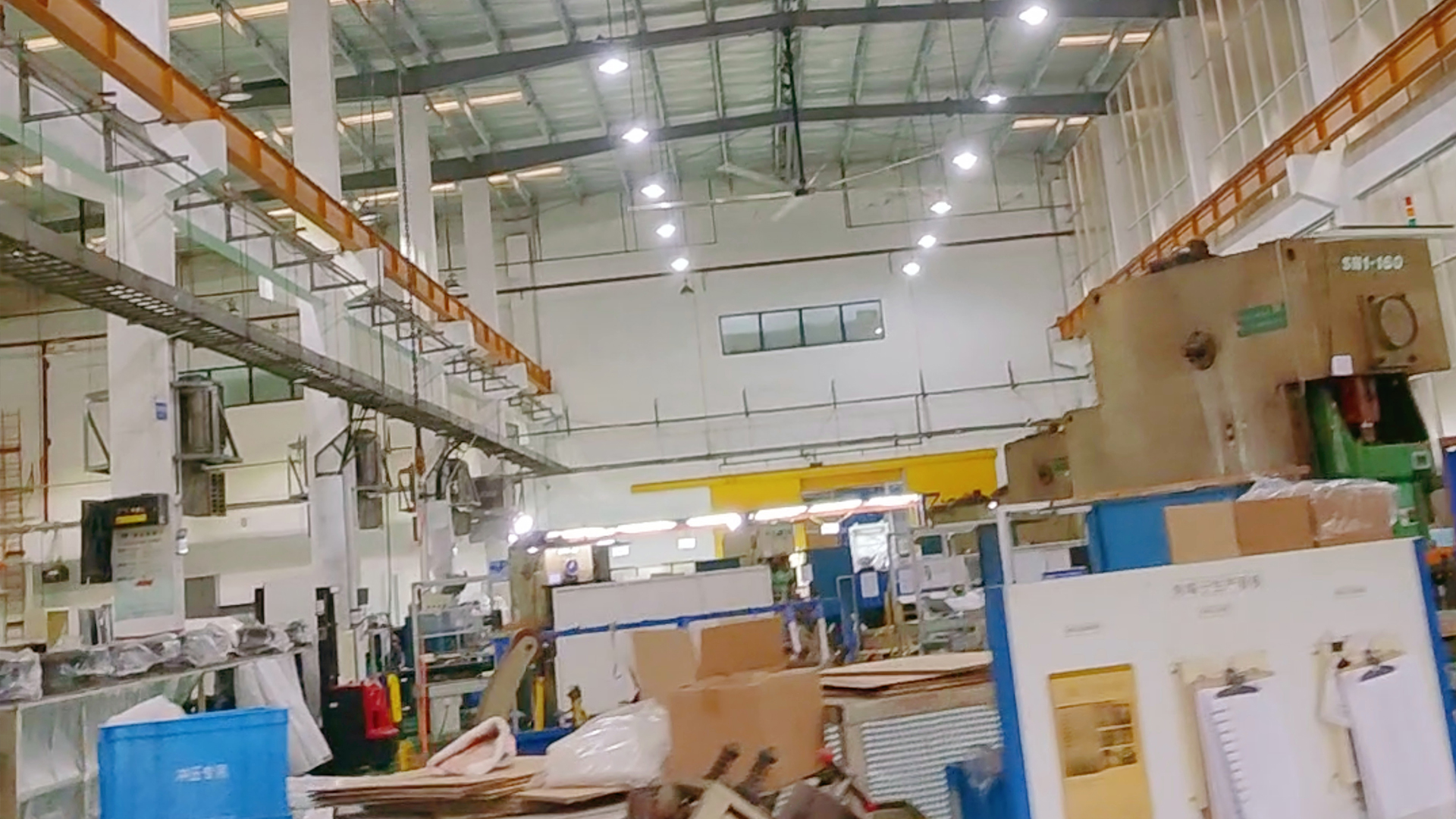
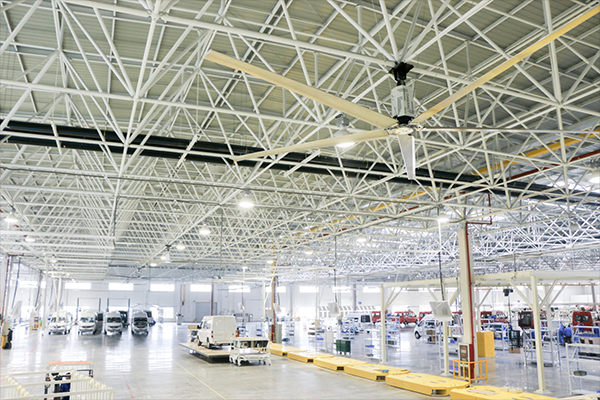
Open‑plan spaces such as machining plants, assembly workshops, warehousing and logistics centers, automotive 4S dealerships, and large exhibition halls are all key application areas for industrial ceiling fans, effectively enhancing ventilation and cooling within these environments.
Public service scenarios
In recent years, public spaces such as large sports venues, waiting halls, and school gymnasiums have increasingly adopted industrial ceiling fans as auxiliary ventilation systems. Compared with conventional air‑supply equipment, these fans deliver a more comfortable indoor environment while significantly reducing overall energy consumption.
As a mainstream large‑scale space ventilation solution for 2026, industrial ceiling fans have become the preferred choice for ventilation upgrades across numerous industrial settings, thanks to their wide coverage, low energy consumption, and superior comfort. Users with specific needs can consult with professional brand teams to obtain tailored, on‑site solutions that align with their unique facility conditions.