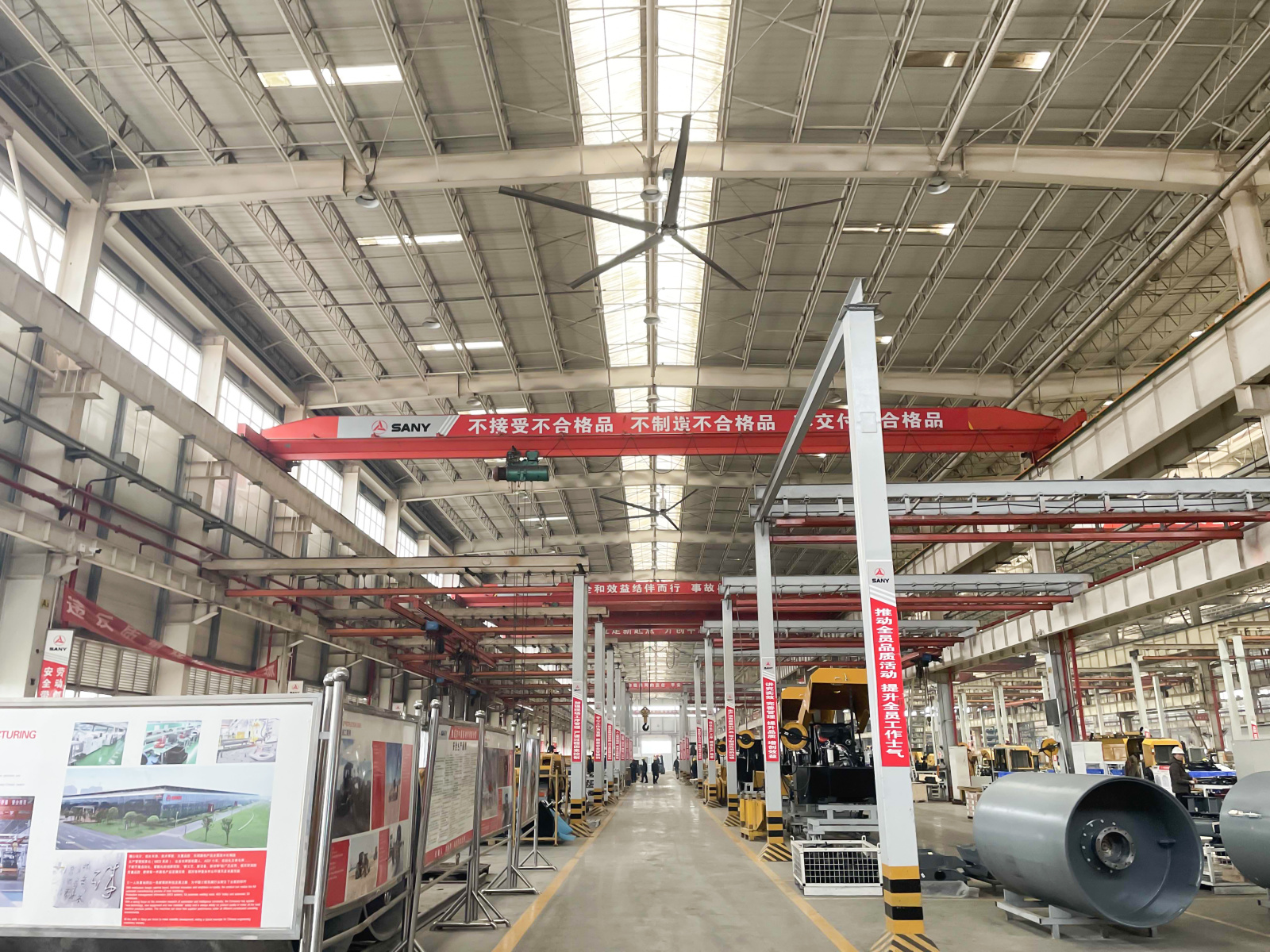
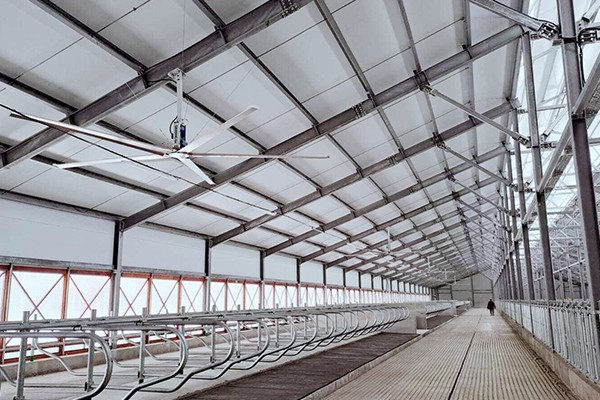
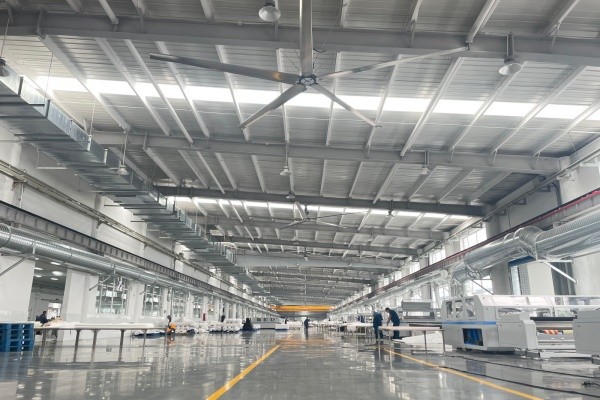
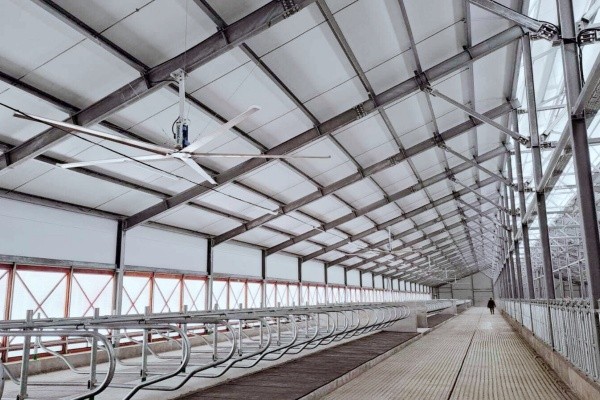
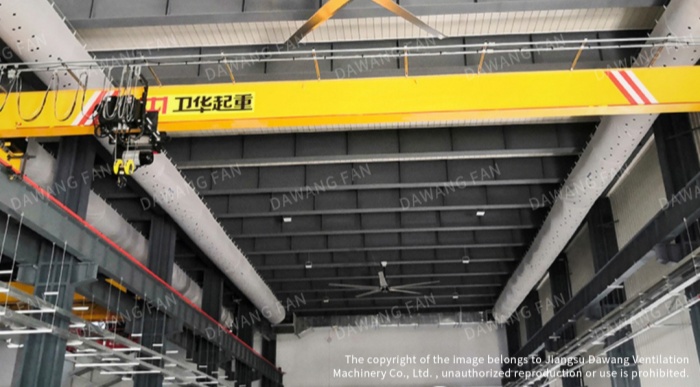
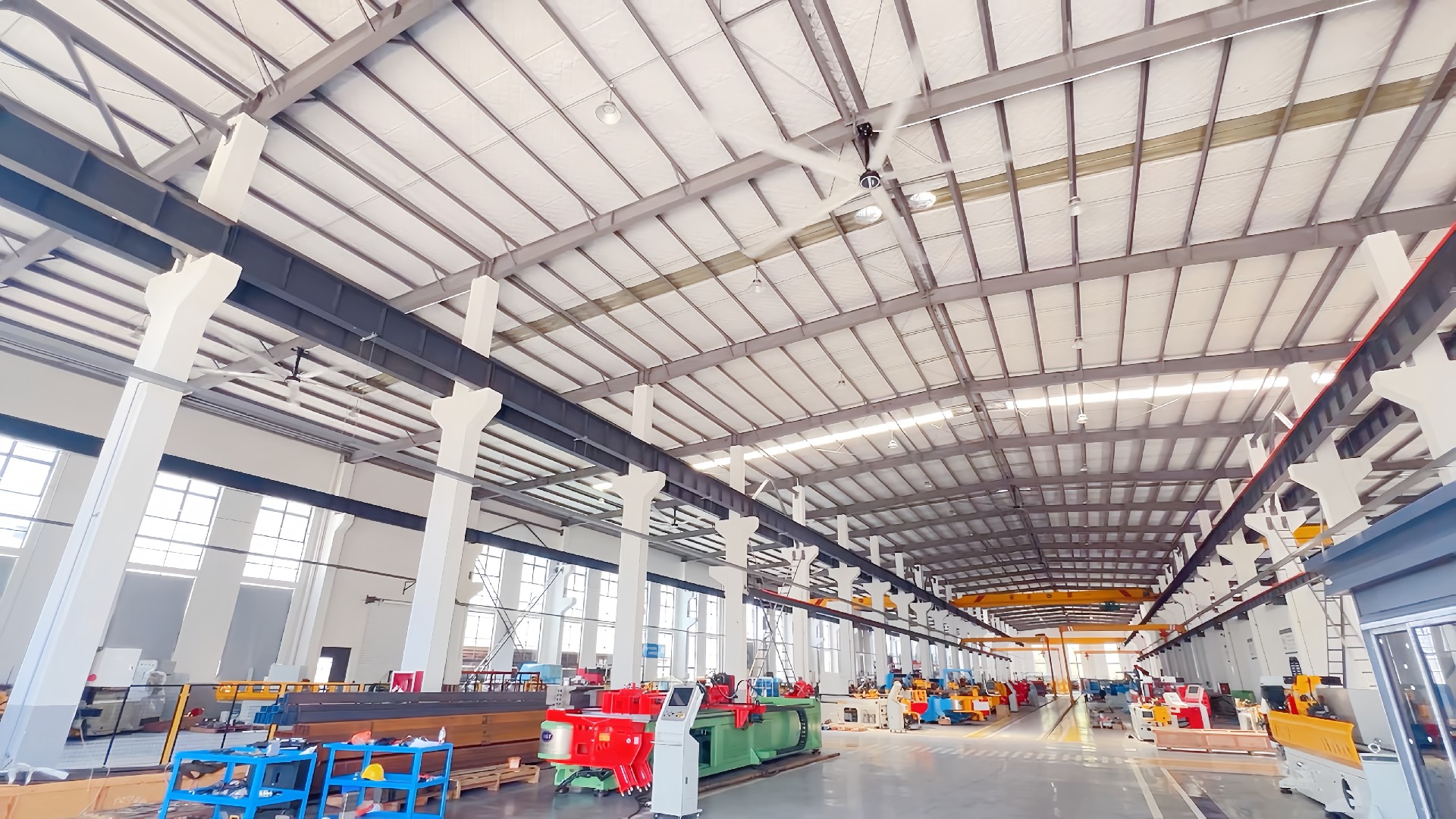
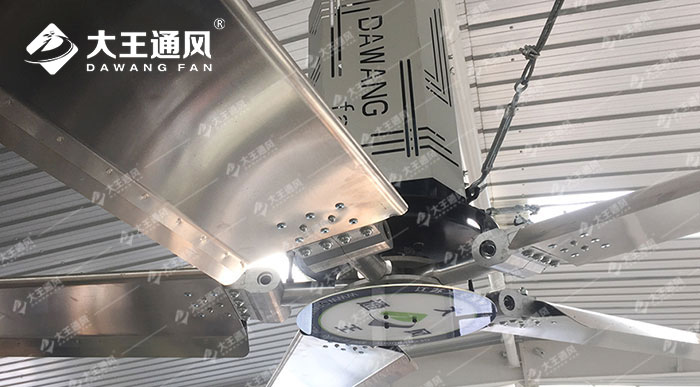
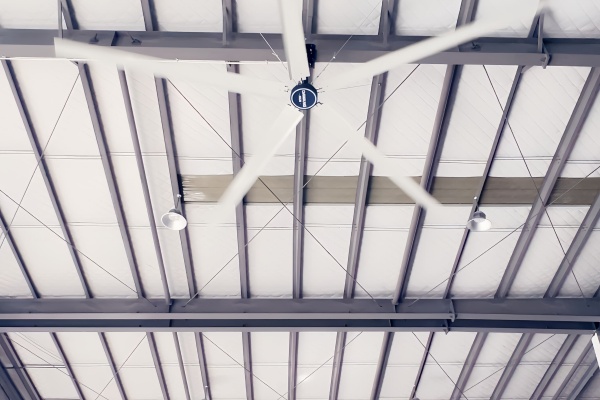
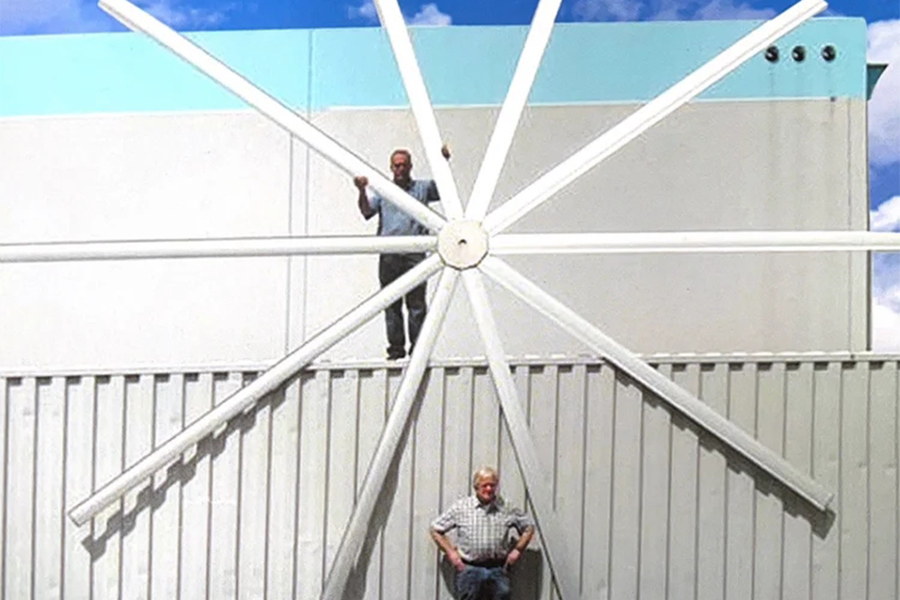
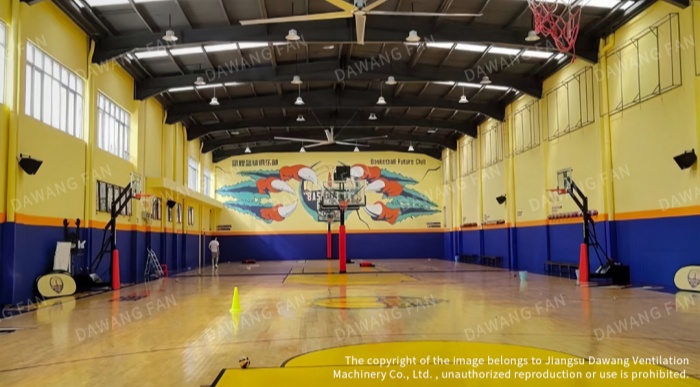
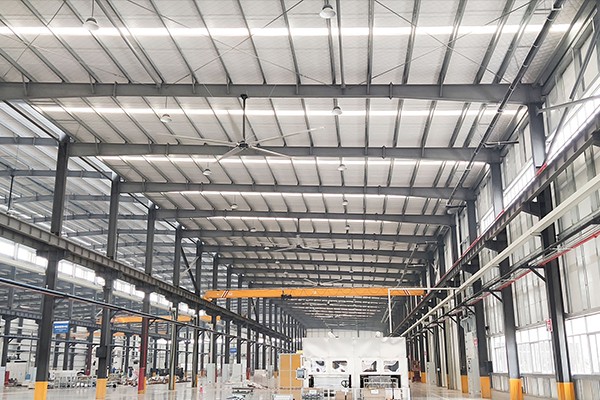
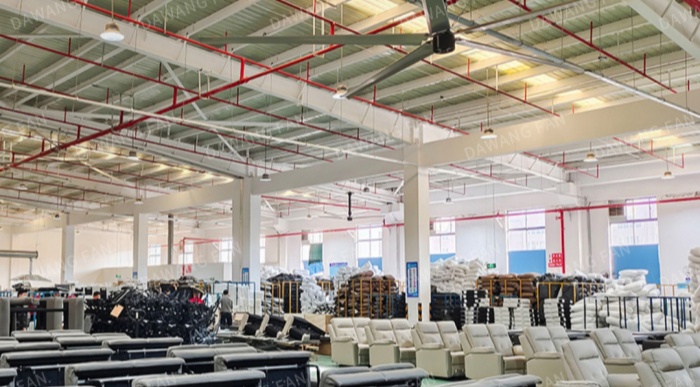
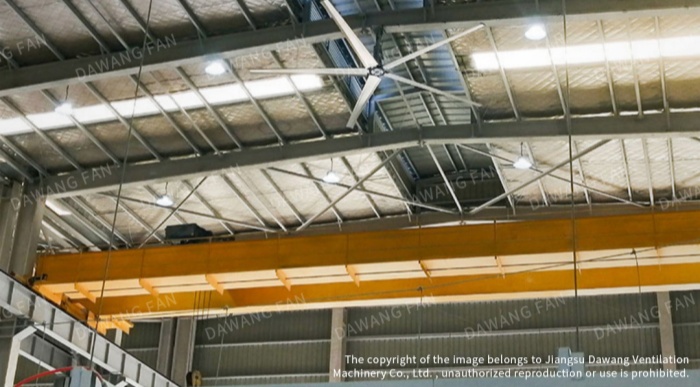
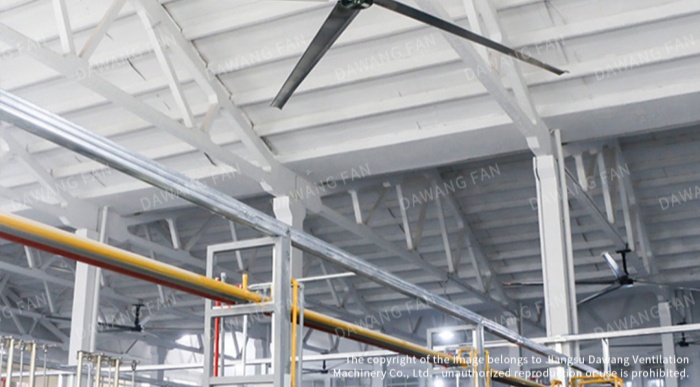
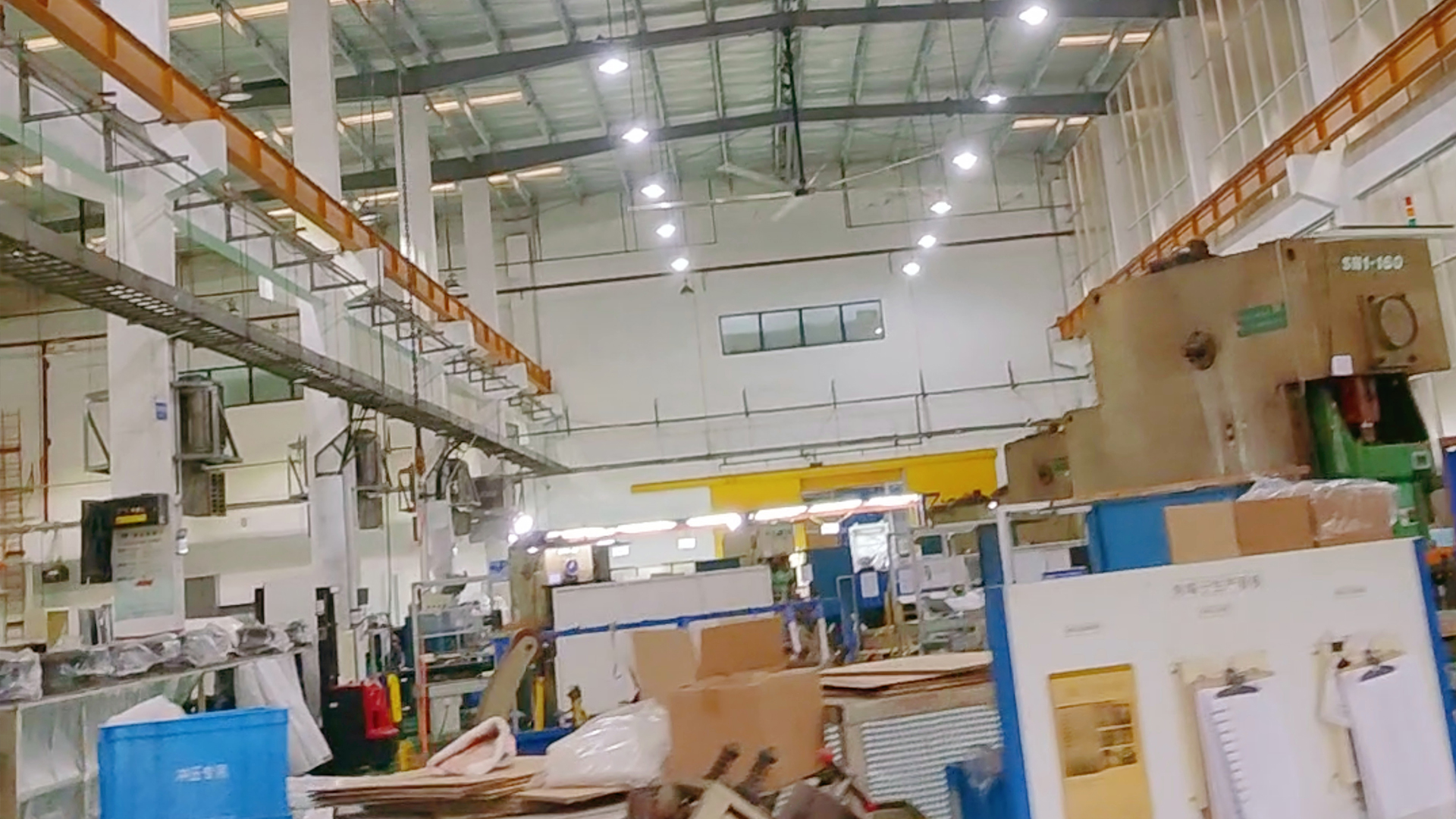
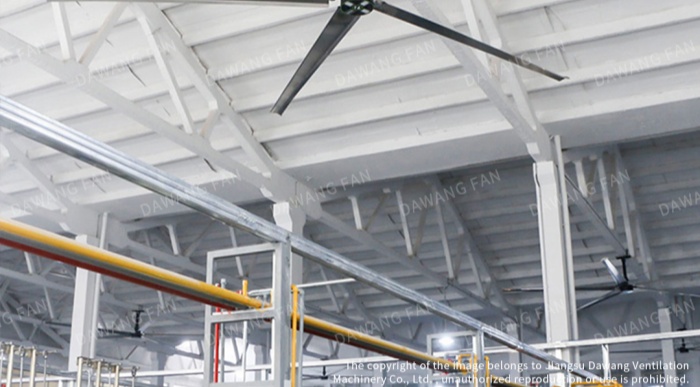
The Dawang Fan is an energy-efficient ventilation system for large spaces, launched by Jiangsu Dawang Ventilation Machinery Co., Ltd. It leverages 8.5-meter-diameter blades to achieve comprehensive air circulation throughout the entire area. , The operating mode can be tailored to each season, ensuring optimal ventilation performance throughout the year.
Description of the Core Fundamental Features of the Dawang Fan
Dawang Ventilation industrial fans adopt a design philosophy of large-diameter, low-speed operation, replacing the conventional dispersed arrangement of multiple small fans. By 2026, mainstream models will be able to cover an area of over 1,800 m² per unit, with overall energy consumption reduced to approximately 5% of that of traditional air conditioning systems.
Core Principle of Air Circulation in Large Spaces
Unlike conventional industrial fans that blow air directly onto the human body, Dawang Ventilation’s industrial fans propel airflow from the base outward in all directions, creating a biomimetic natural wind field of 1–3 m/s. This ensures uniform coverage across all areas of high‑ceiling spaces such as factories, warehouses, and supermarkets, eliminating localized ventilation dead zones.
Coverage Area and Energy Consumption Parameter Benchmark
The standard 8.5-meter “King” industrial ventilation fan has a rated power of just 1.5 kW, and at full speed it consumes only 1.5 kWh per hour—far lower than the overall energy consumption of conventional floor fans, resulting in a significant long-term cost advantage.
King Fan Spring-Season Compatibility Features and Key Usage Tips
During the spring, Dawang Ventilation industrial fans can effectively address the high-humidity challenges posed by the plum rains in southern China and the “return-to-south” weather in northern China. They deliver comprehensive dehumidification without requiring heavy‑duty operation, thereby reducing the risk of moisture‑related damage and mold to items stored indoors.
Advantages of Spring Mold Prevention and Dehumidification Solutions
In spring, relative humidity typically exceeds 70%, which can cause raw materials in electronic manufacturing facilities to absorb moisture and stored goods to develop mold. Operating DaWang industrial ventilation fans at a consistently low speed helps circulate air, preventing the accumulation of moisture on floors and walls, and has been shown to reduce indoor humidity by approximately 15%.
Energy-Saving Tips for Low-Speed Operation in Spring
In spring, ambient temperatures are mild, so there’s no need to run the fan at full speed. You can set the Dawang industrial ventilation fan to low-speed settings 2–3, which maintains effective dehumidification while further reducing overall energy consumption, keeping monthly operating costs under RMB 100.
Summer Cooling Performance and Pairing Recommendations for DaWang Fans
During the summer, DaWang fans enhance air circulation, boosting the evaporation rate of human sweat and delivering a perceived cooling effect of 5–8°C, making them the ideal, low-cost solution for cooling large spaces.
Measured Cooling Effect on Human Thermal Comfort in Summer
In 2026, field measurements conducted by a third-party organization at an automotive components manufacturing facility in the Yangtze River Delta revealed that, under summer ambient temperatures of 35°C, activating the Dawang industrial ventilation fans reduced the perceived temperature in workers’ workstations to approximately 30°C, resulting in a productivity increase of more than 12%.
Combined usage method with the air cooler
To achieve better cooling performance, follow these steps:
Turn on the air cooler one hour in advance to circulate cool air throughout the space.
Turn on the King‑style industrial ventilation fan to its medium speed setting to circulate cool air throughout the entire area.
Once the temperature reaches the set point, adjust the fan speed to maintain uniform temperature throughout the entire area.
Autumn Ventilation Characteristics and Operation & Maintenance Considerations for King Fan Models
During the autumn season, Dawang ventilation industrial fans can swiftly expel the lingering heat and stale air from summer, accelerating the dissipation of odors within the space. They are ideally suited for applications in food processing, chemical repackaging, and other environments that demand robust air circulation.
Adaptation performance of exhaust gas treatment in the autumn workshop
In autumn, with comfortable outdoor temperatures, opening windows and running the Dawang industrial ventilation fan simultaneously can achieve full‑area air exchange in spaces exceeding 1,000 m² within one hour, quickly eliminating welding fumes, machining odors, and other lingering smells from the workshop—without the need to activate exhaust systems.
Seasonal Equipment Routine Inspection Procedure
After the peak autumn‑use period ends, perform routine inspections on DaWang industrial ventilation fans, checking the tightness of blade‑hub connections and the oil level in the gearbox. Address minor issues proactively to prevent operational malfunctions during winter use.
Winter Anti-Condensation Features and Application Scenarios of the Dawang Fan
When operated in low-speed reverse mode during winter, the DaWang fan helps circulate and disperse warm air from the roof downward, mitigating condensation and dripping caused by temperature differentials in steel‑framed roofs and addressing the common issue of stored goods getting wet from drips.
Principle of Condensation Suppression for Steel-Structure Roofs in Winter
When the indoor–outdoor temperature difference exceeds 15°C in winter, steel‑structure roofs are prone to condensation and dripping. Operating DaWang industrial ventilation fans at low speed helps break up the thermal stratification of air beneath the roof, maintaining a uniform surface temperature and thereby reducing condensation at its source.
Winter Low-Speed Forward/Reverse Operation Tips
In winter, there’s no need to engage the high-speed setting; simply set the Dawang industrial ventilation fan to its lowest speed and alternate between forward and reverse every two hours. This approach ensures uniform air circulation throughout the space with virtually no additional energy consumption, thereby preventing excessive temperature differentials in localized areas.
Common Misconceptions About Seasonal Use of King Fan and How to Avoid Them
Industrial ventilation fans from Dawang typically have a service life of over 10 years; improper seasonal usage can shorten the equipment’s lifespan, and avoiding common misconceptions can further extend its operational cycle.
The issue of energy waste caused by blindly operating at full speed across different seasons.
Many users run their fans at full speed year-round, which not only wastes energy unnecessarily but also accelerates wear at the blade‑hub joints. Adjusting the fan speed to match the season can reduce such unnecessary losses by about 30%.
Lifespan reduction caused by failure to perform seasonal maintenance
Some users operate their DaWang industrial ventilation fans continuously for several years without performing routine maintenance. When the gearbox lubricant is depleted, gear wear accelerates. Conducting a basic inspection at each seasonal change can extend the equipment’s average service life by more than three years.