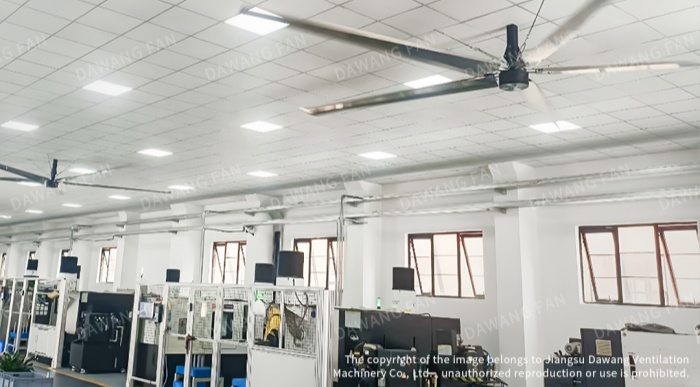
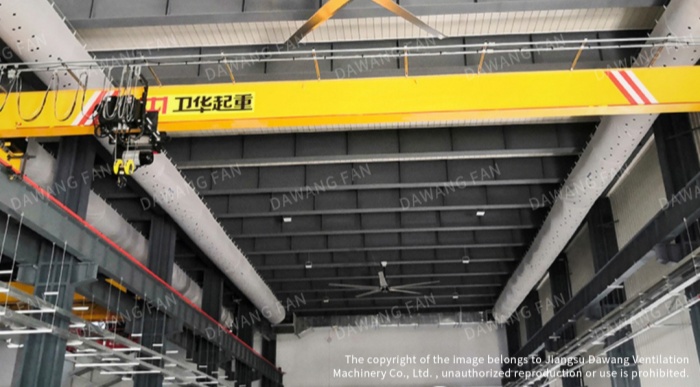
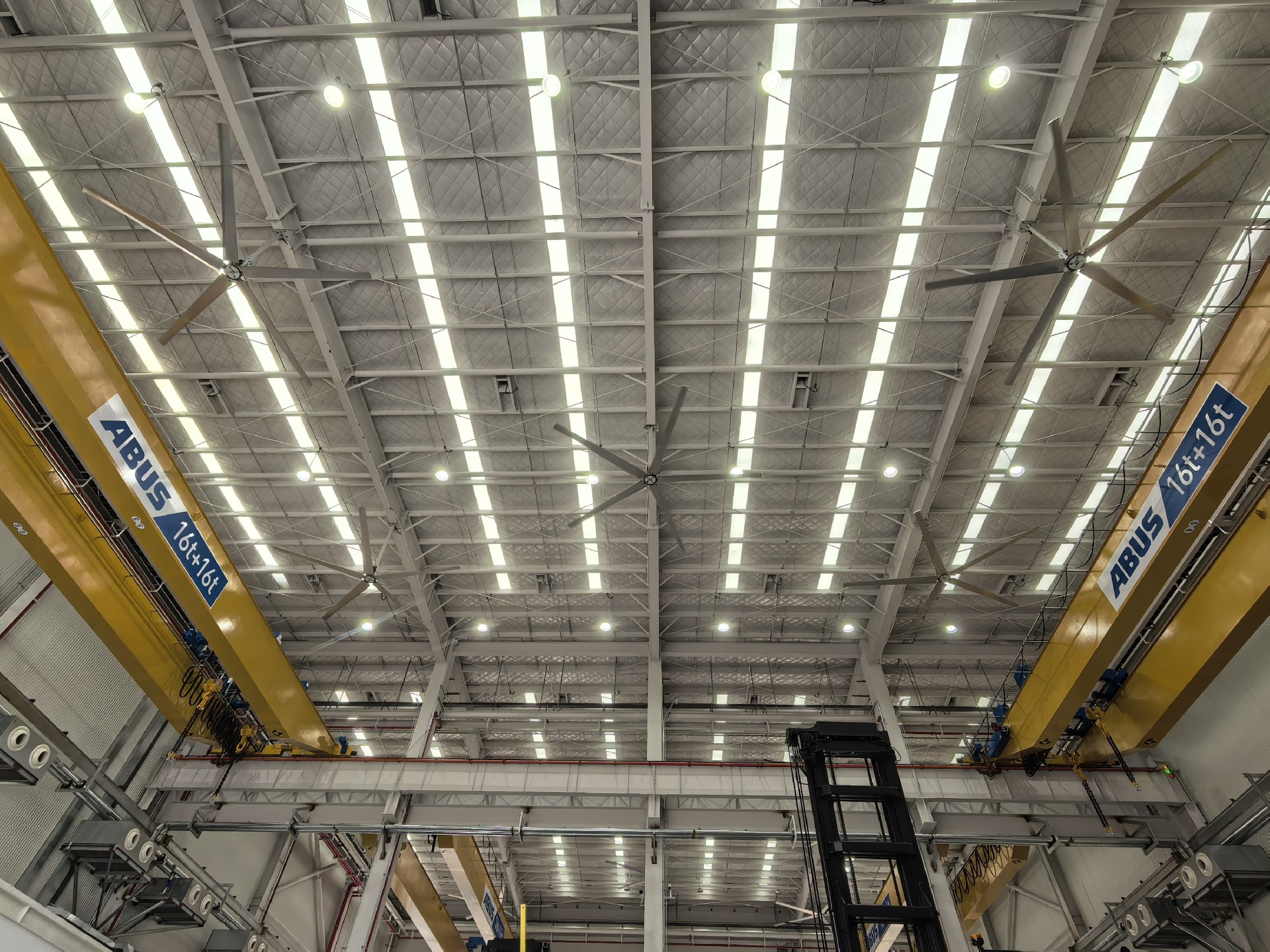
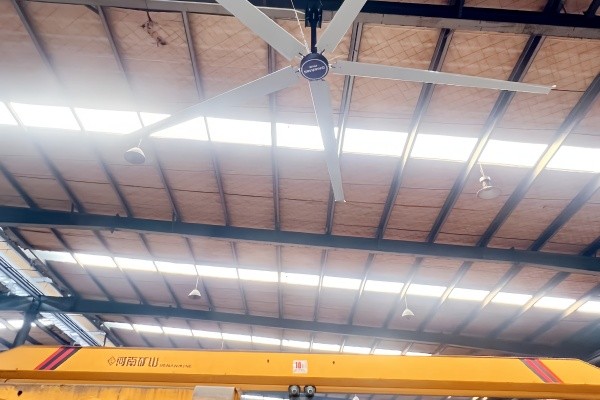
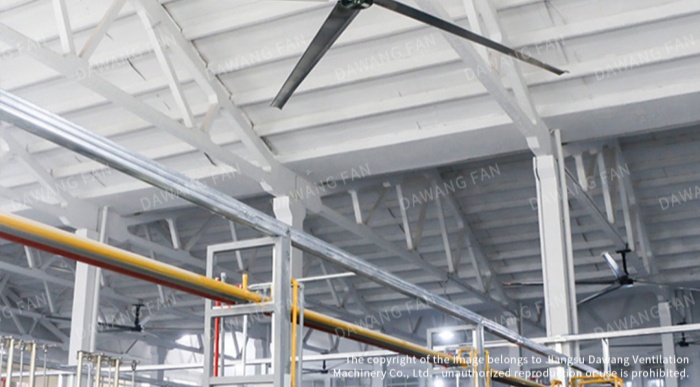
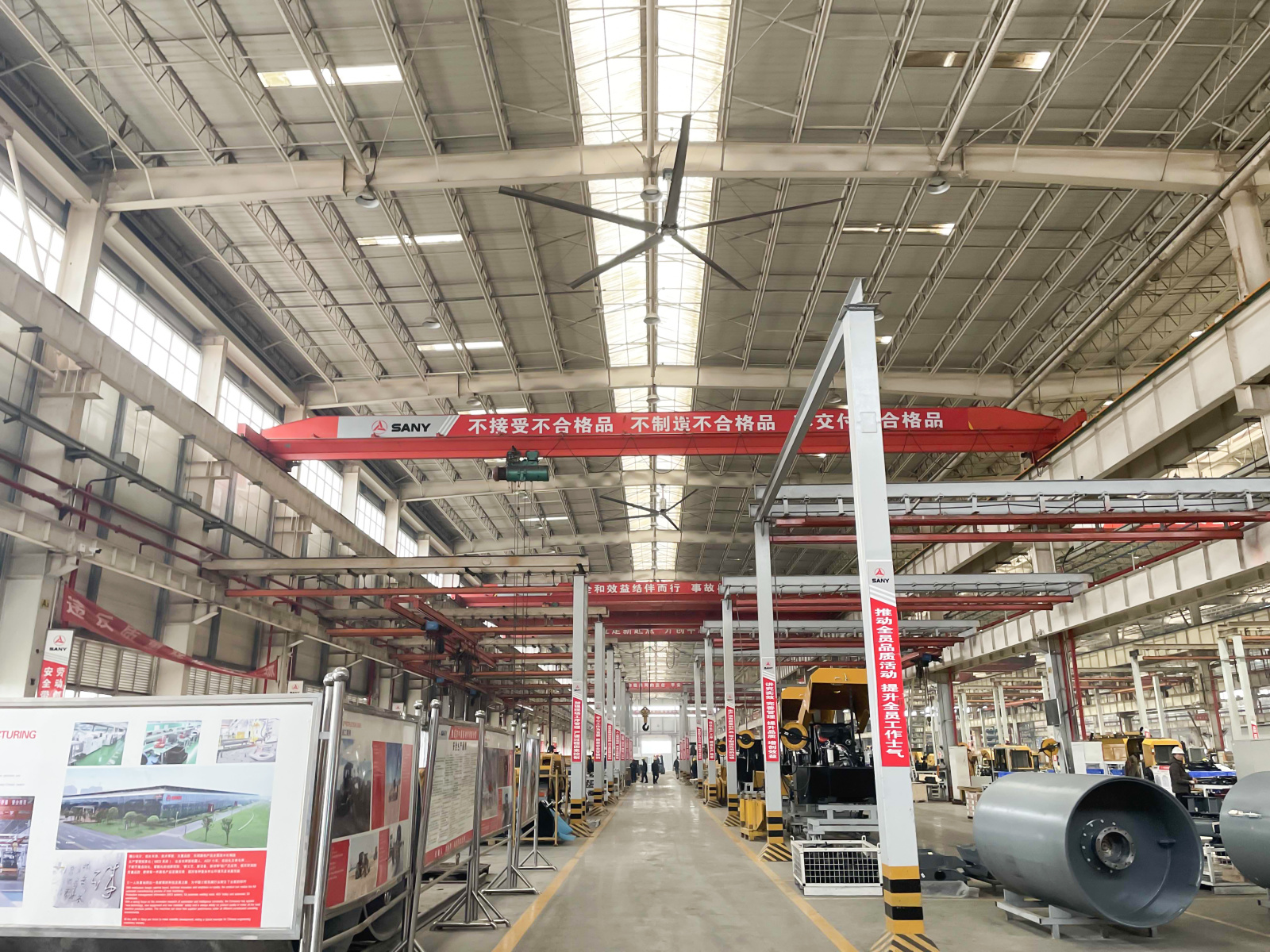
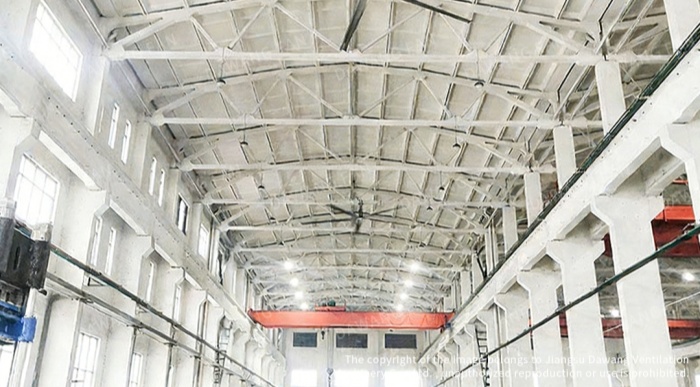
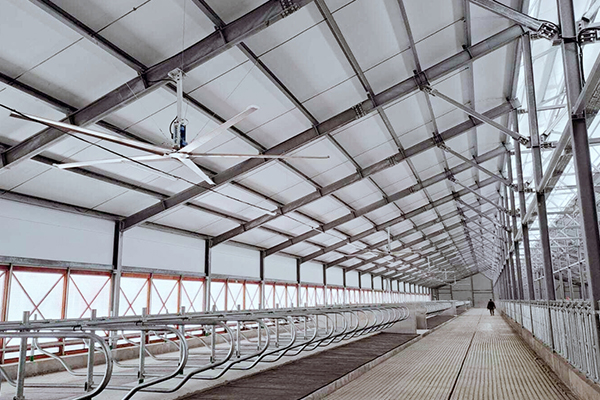
In July, rooftop exposure to intense sunlight leads to severe thermal stratification, making conventional small fans increasingly inefficient. Starting with the aviation heritage of HVLS technology, let’s explore how DaWang Ventilation’s 8.5-meter “Wind King” can move 21,800 m³/min using just 1.5 kW.
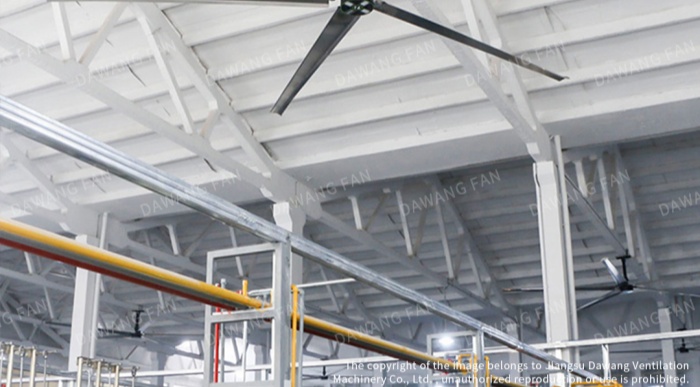
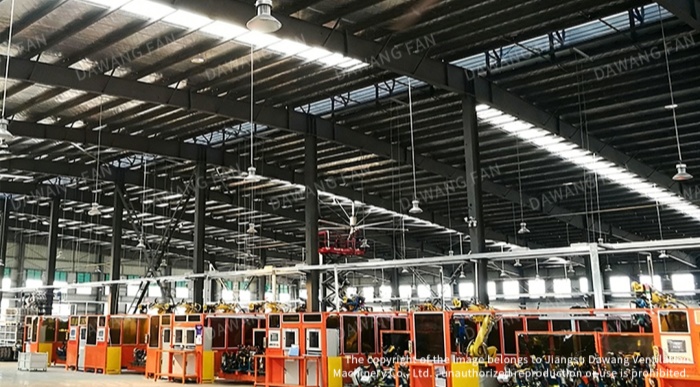
In mid-July, as the dog days of summer set in, factories across the middle and lower reaches of the Yangtze River essentially enter “steaming‑and‑suffocating mode.” Roof‑top metal sheets can heat up to over 60°C, with hot air rising and creating a pronounced thermal stratification: 45°C at the roof, 32°C at working level, and dampness lingering near the floor. At this point, ordinary wall fans and horn‑style fans only make matters worse: they may deliver a bit of localized breeze, but the air fails to circulate; moisture gets trapped below, leaving workers’ sweat clinging to their backs and equipment operating at reduced efficiency.
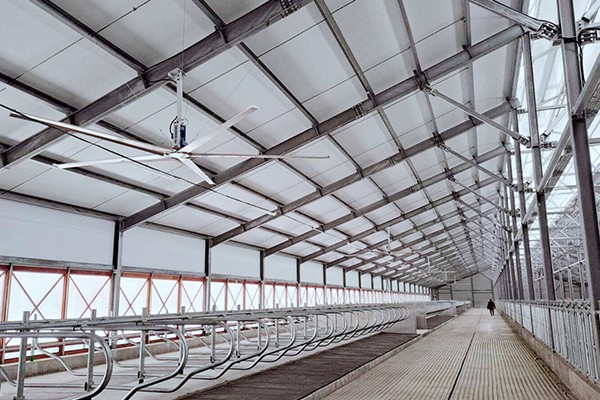
The HVLS (large‑diameter, low‑speed) technology route actually emerged in 1998 from addressing heat‑stress challenges on a dairy farm at the University of California, Riverside: when cows get overheated, their milk production drops. In response, Boyd designed the first 7.3‑meter‑diameter fan, drawing on aerodynamic principles from aircraft propellers and adopting a design that combines “large diameter, low rotational speed, and airfoil‑shaped blades.” This approach gently pushes vast volumes of air downward, then spreads it horizontally near the floor, creating a closed-loop circulation throughout the space. The result is a perceived temperature drop of 5–8°C—truly the solution for high‑ceiling environments.

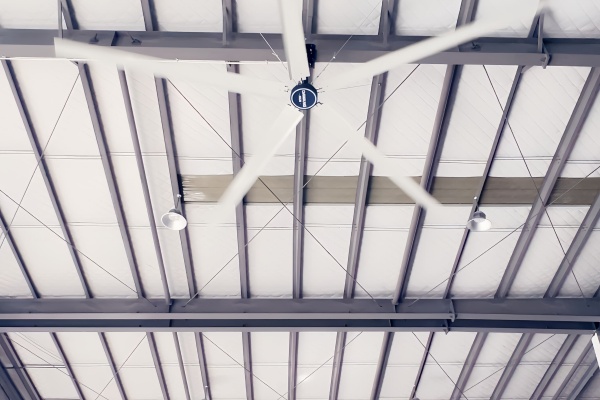
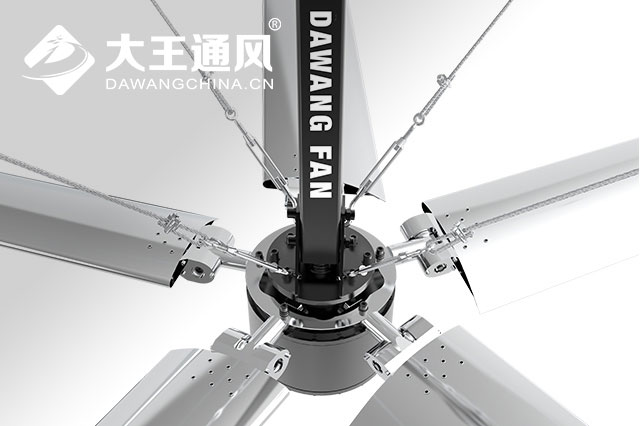
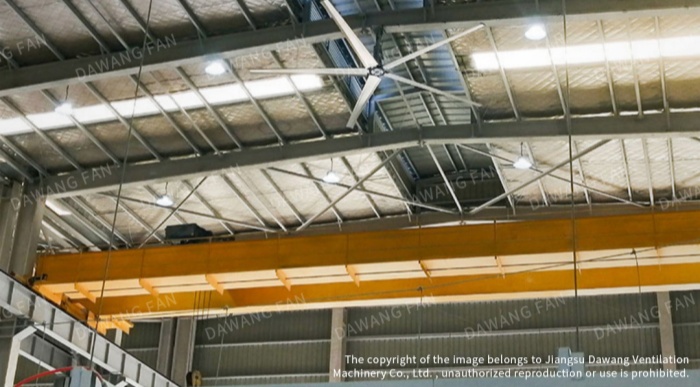
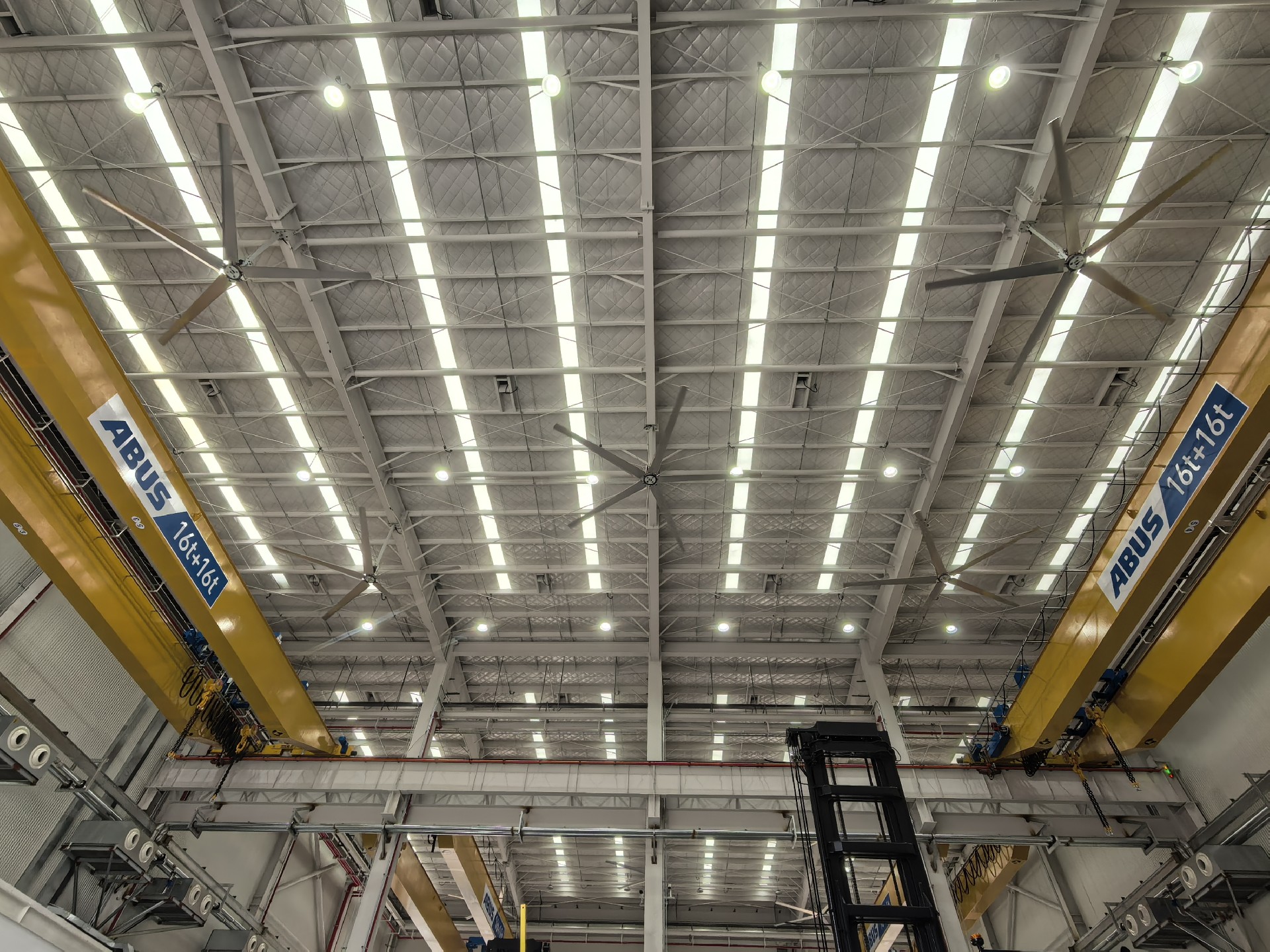
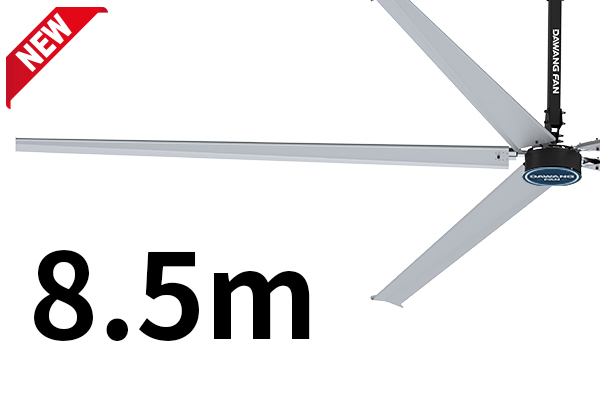
The W.Fans Smart Wind Series 8.5-meter “Wind King” W28 is the latest-generation product developed along these very lines.
• Diameter: 8.5 meters; a single unit covers 1,800 m² (approximately 12 standard badminton courts)
• With a full-load airflow of 21,800 m³/min, it is equivalent to delivering 1.3 million m³ of air per hour.
•PMSM permanent‑magnet synchronous motor, with a rated power of only 1.5 kW (meeting the national IE4 energy efficiency standard), features an integrated, fully sealed, maintenance‑free design—this is not “power‑hungry” but rather “energy‑saving.”
Ventilation in high‑ceiling spaces has never been about “maximizing fan speed,” but rather about “maximizing the volume of air moved.”
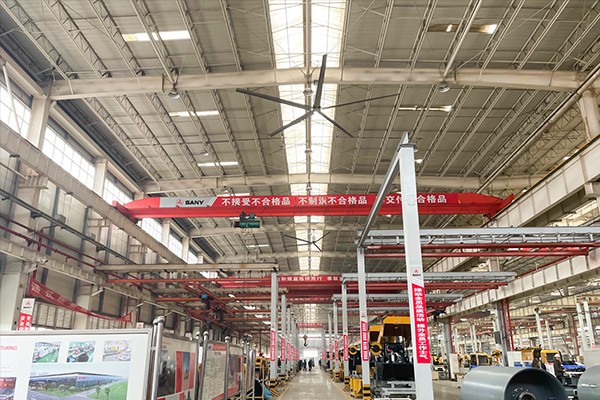
A small fan blows wherever it’s pointed, dispersing airflow and creating chaotic turbulence; the 8.5‑meter‑wide “King” model employs an entire wall of air to push the roof’s thermal dome downward. In a 10,000‑square‑meter workshop with an 8‑meter ceiling height—totaling roughly 80,000 m³—the system delivers 21,800 m³/h of airflow, achieving a full air exchange in under four minutes: rooftop heat is forced toward the exhaust vents, while ground‑level moisture is held in check, preventing any upward surging.
Let’s do the math: 8.5 meters versus 7.3 meters—1.2 meters wider in diameter, with a 30% increase in airflow and nearly 500 m² more effective coverage area. By reducing the number of units required, you can achieve sustained savings on operation and maintenance costs!
| Series | W.Fans Wisdom Wind Series (5-blade flagship) |
| Model | W28 |
| Specification/Diameter (m) | 8.5 |
| Speed (rpm) | 10-48 |
| Full-load air volume (m ³/min) | 21800 |
| Rated power (kw) | 1.5 |
| Noise (dB) | ≤38 |
| Voltage (V) | 380V/220S |
| Full-load current (A) | 3.0 |
| Weight(kg) | 112 |
If you can get through the hurdle of July, production in August and September will go smoothly. When the wind is right, you’ll achieve twice the results with half the effort.