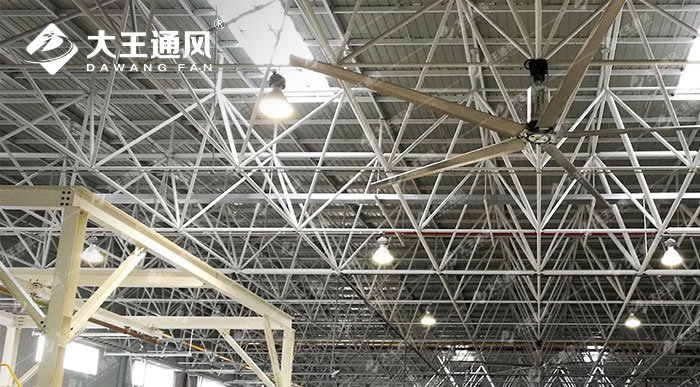
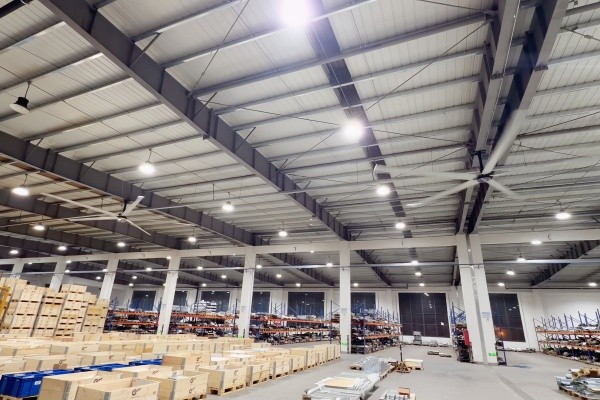
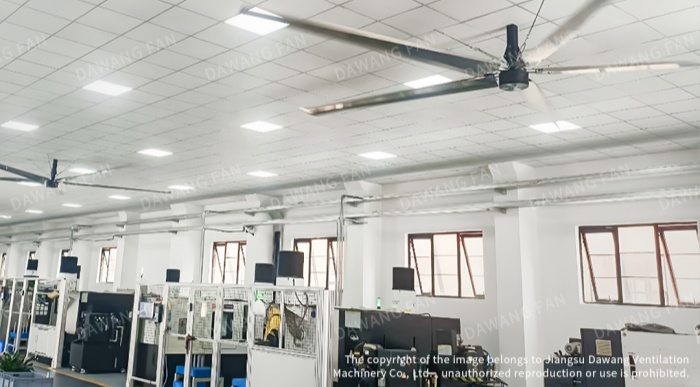
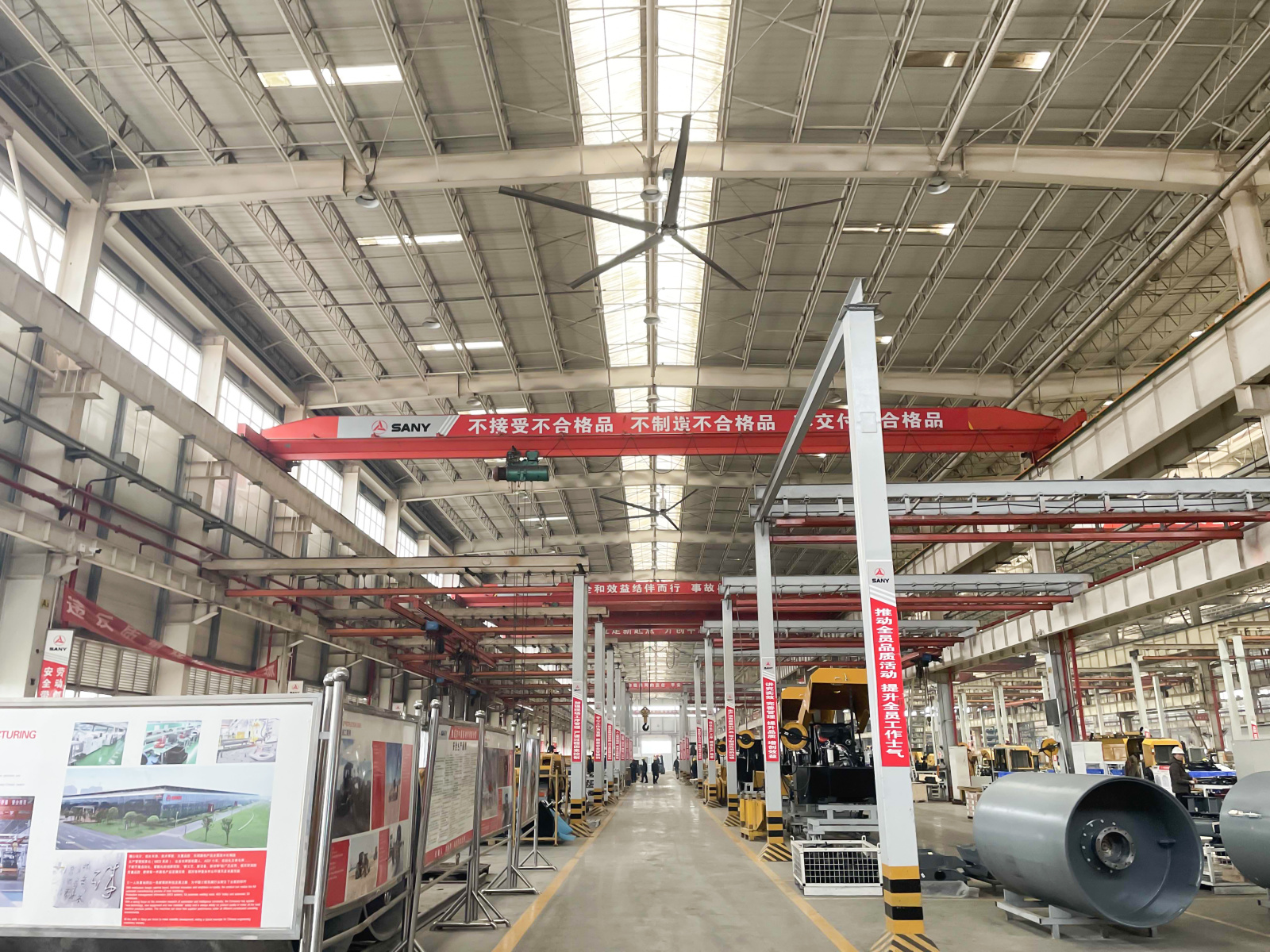
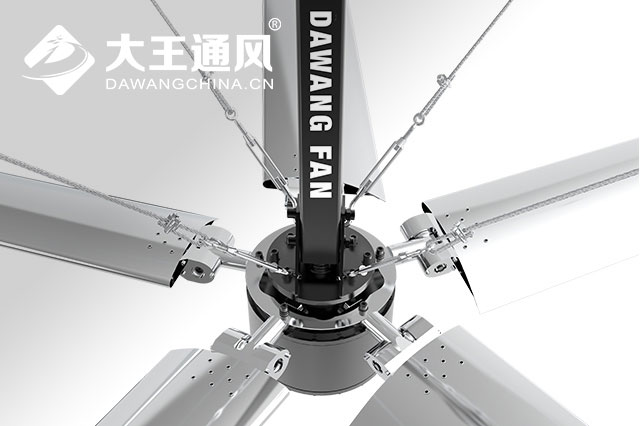
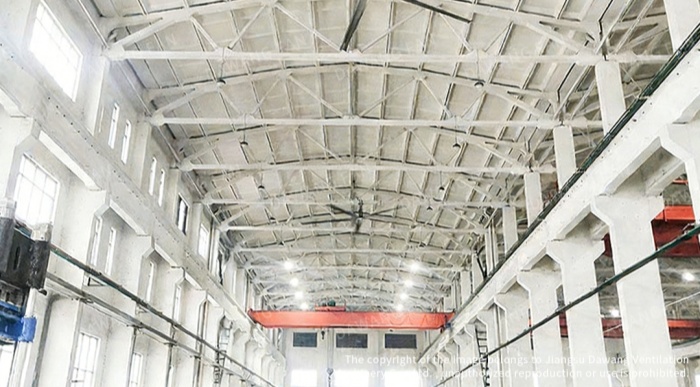
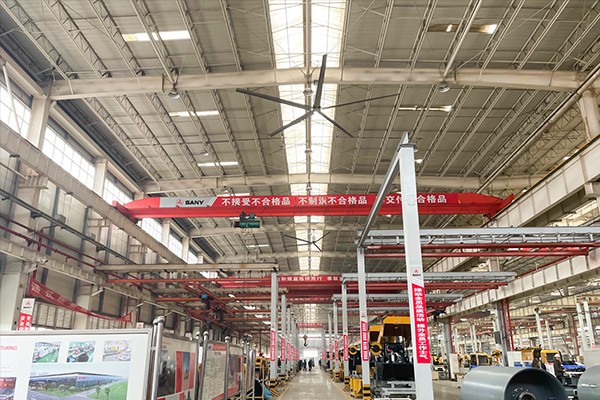
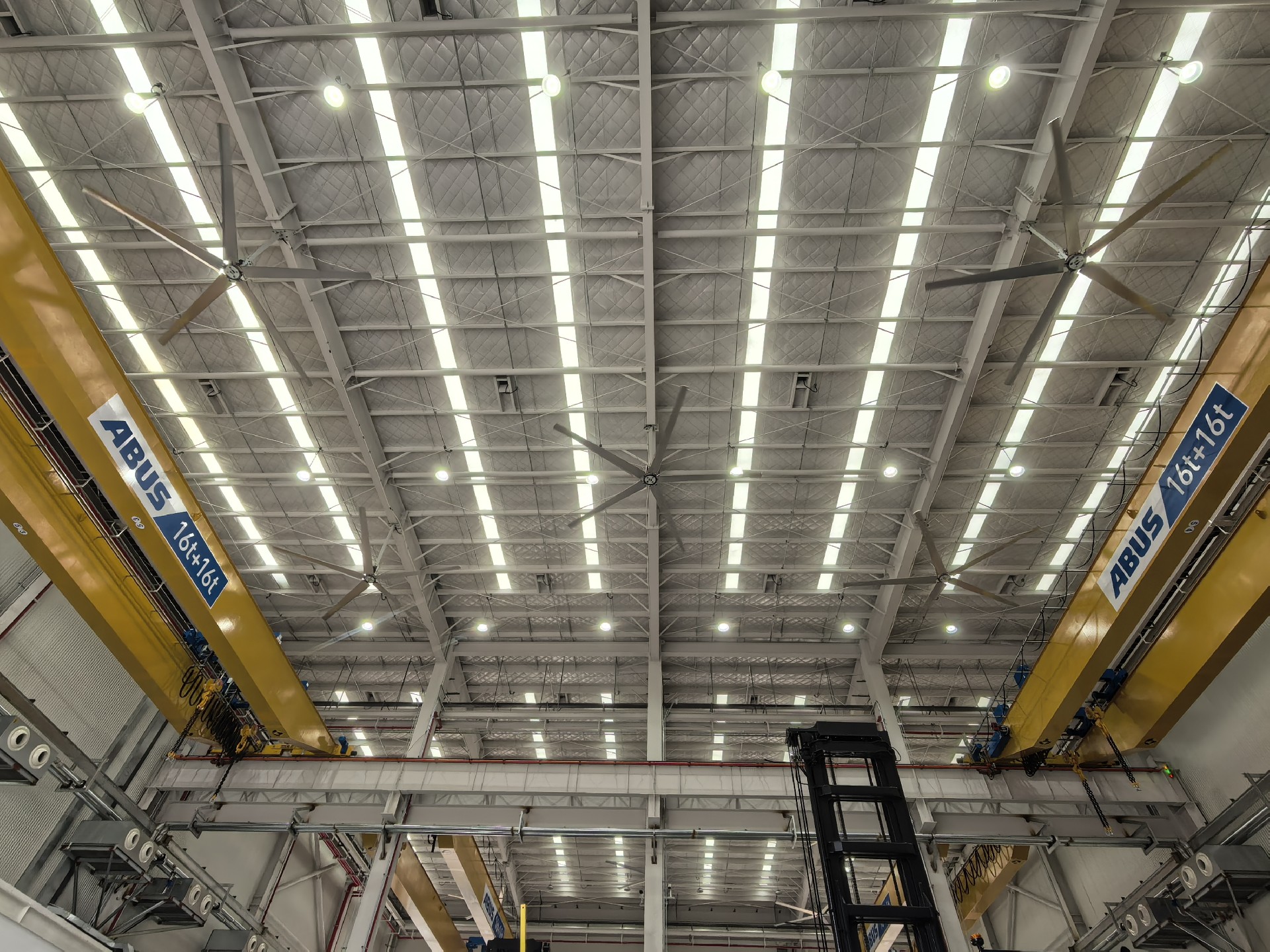
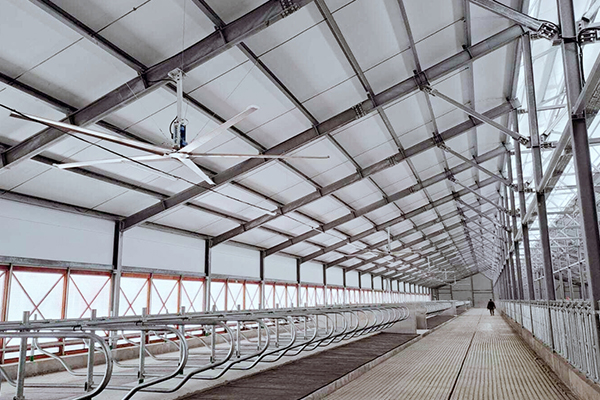
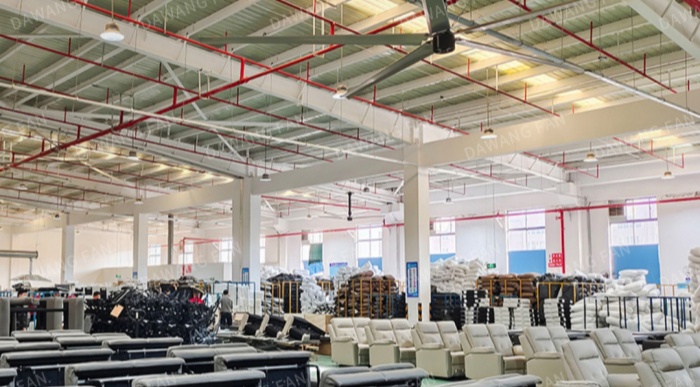
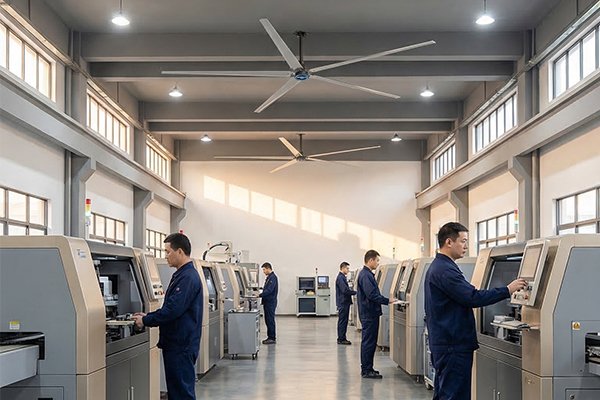
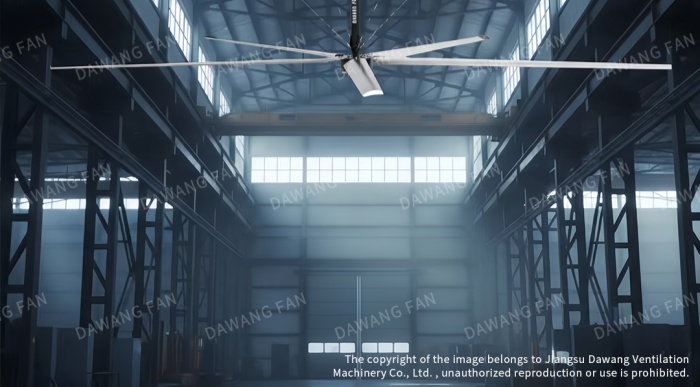
Industrial fans are a new type of industrial ventilation equipment that leverages large-diameter blade airflow circulation technology to provide wide‑area, dead‑zone‑free ventilation and cooling. As the flagship product of Jiangsu Dawang Ventilation Machinery Co., Ltd., it has already been deployed in over a thousand large‑space projects nationwide. According to the latest field test data from 2026, under comparable conditions, the total ventilation and cooling costs of this equipment amount to roughly 15% of those associated with conventional air-conditioning systems, offering exceptional cost‑effectiveness.
Analysis of the Core Advantages of Dawang Ventilation Industrial Fans in 2026 for Ventilation and Cooling
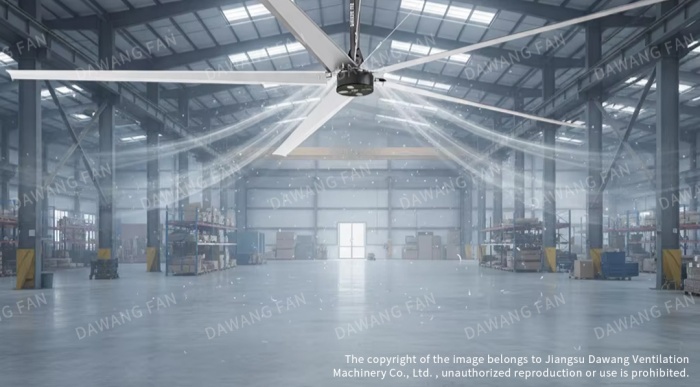
The ventilation and cooling performance of Dawang Ventilation industrial fans is widely recognized in the large‑space ventilation industry as a highly cost‑effective solution. Unlike traditional small fans that deliver air only to specific points, this product generates a gentle, slow‑moving airflow that circulates throughout the entire space, gradually removing accumulated hot air and stagnant moisture to provide uniform, comfortable cooling.
Fundamental performance advantages: wide coverage and low energy consumption
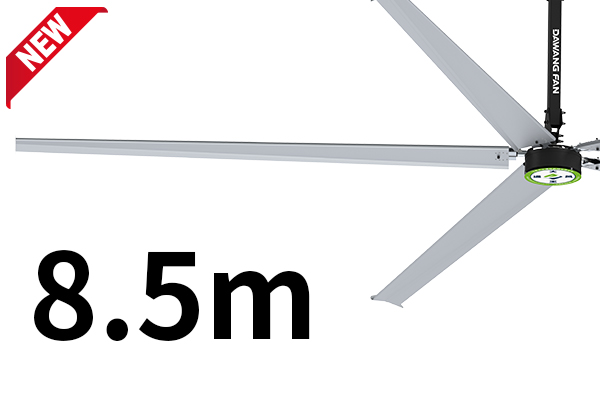
Dawang ventilation industrial fans feature blade diameters of up to 8.5 meters and operate at a mere 1.5 kW per unit; running for 10 hours a day consumes less than 15 kWh, far below the energy consumption of conventional industrial cooling equipment. According to the 2026 Industrial Ventilation Industry Report, these large‑diameter industrial fans require only 6% of the energy per unit area compared with traditional wall‑mounted mini‑fans, enabling substantial long-term savings on ventilation and cooling electricity costs for businesses.
Optimized Design for Thermal Comfort in Naturally Simulated Air Supply
The Dawang ventilation industrial fan features a multi-blade, arc‑shaped aerodynamic design that mimics the natural flow of wind. Unlike conventional high‑speed fans, it avoids the uncomfortable, direct blast of air, ensuring that workers who spend extended periods in the airflow zone do not experience joint discomfort or dry skin. Moreover, its all‑area circulating airflow helps prevent excessive temperature differentials within the space, enhancing overall environmental comfort.
Dawang Industrial Ventilation Fans: A Summary of Common Applications for Ventilation and Cooling
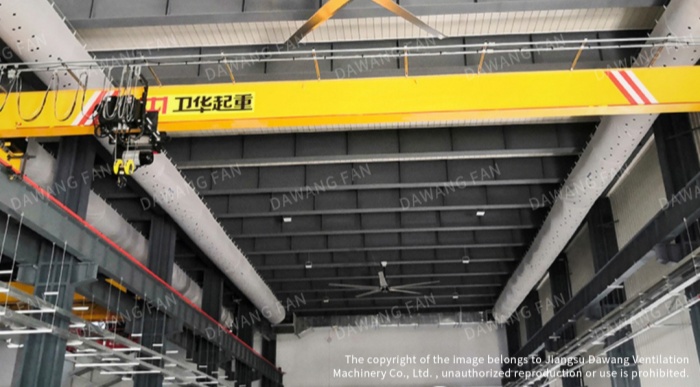
Dawang Ventilation’s industrial fans deliver effective ventilation and cooling, making them suitable for most large‑space applications with ceiling heights of 4 meters or more. They require no floor space for operation and can be installed directly on steel‑frame or concrete roofs, ensuring they do not disrupt routine production workflows.
Floor-standing ventilation and cooling for large production facilities
For large industrial facilities in sectors such as equipment manufacturing, automotive component machining, and textile production—where workforce density is high and equipment generates substantial heat—Dawang industrial ventilation fans can swiftly and evenly disperse the excess heat emitted by machinery, removing hot exhaust gases that accumulate around workstations. This helps prevent localized overheating that can reduce production efficiency; field tests have shown that they can lower the perceived indoor temperature by 5–8°C.
Ventilation and Cooling Adaptation for Logistics Warehousing Centers
Logistics and warehousing centers typically have ceiling heights of 8 meters or more, and the goods stored there are often highly sensitive to humidity. Dawang Industrial Ventilation Fans’ full‑area air circulation helps prevent moisture buildup and mold in warehouse corners, while also lowering the perceived temperature in storage areas, alleviating the stifling heat and discomfort experienced by sorting and handling staff during the summer months, and boosting overall operational efficiency.
| Comparison dimension | Wall-Mounted Mini Fan Ventilation Solution | Traditional HVAC System Design | King Ventilation Industrial Fan Ventilation Solution |
|---|---|---|---|
| Coverage area per unit | ≤20㎡ | ≤100㎡ | 1000-1800㎡ |
| Single-unit operating power | 0.15KW | 5KW | 1.5KW |
| Perceived temperature drop | 1-2℃ | 8-10℃ | 5-8℃ |
| Adaptable to a range of ceiling heights | 2-3m | ≤4m | 4-12m |
According to industry research data from 2026, in large‑space applications, the total investment cost for ventilation and cooling using Dawang industrial fans is more than 85% lower than that of conventional air-conditioning systems, while annual operating energy costs are only about 10% of the latter. As a result, this solution has become the preferred choice for most manufacturing enterprises today.
Methods for Predicting Ventilation and Cooling Performance During the Selection Phase of DaWang Industrial Ventilation Fans
The ventilation and cooling performance of Dawang industrial fans is directly linked to proper model selection and system matching. Users can leverage the specific parameters of their facility to calculate in advance the appropriate number of units and their power ratings, ensuring that subsequent operational results meet expectations.
Determine the optimal number of units based on site parameters.
First, determine the total floor area, the effective clear ceiling height, and the distribution of internal obstructions. Based on the standard that each conventional model can cover approximately 1,000 m², calculate the baseline number of units required. If the space contains numerous large pieces of equipment or shelving that impede airflow circulation, consider adding one to two additional units to prevent ventilation dead zones.
Combined efficiency-enhancing solutions for use with other devices
If certain areas have stringent temperature‑control requirements, the DaWang industrial ventilation fan can be paired with an evaporative air cooler. The fan’s comprehensive air circulation ensures that the cooler’s cool airflow is rapidly distributed throughout the space, delivering superior cooling while reducing energy consumption. This approach improves airflow uniformity by more than 70% compared to using an air cooler alone.
DaWang Industrial Ventilation Fans: Daily Operation and Maintenance Tips for Maintaining Ventilation and Cooling Efficiency
The ventilation and cooling efficiency of Dawang Ventilation industrial fans remains consistently stable over the long term. By performing routine, straightforward maintenance on a regular basis, you can significantly extend the equipment’s service life and ensure that its air‑delivery performance does not experience any noticeable decline.
List of Core Components for Periodic Inspection
It is recommended to conduct a routine equipment inspection every three months, with particular attention to the tightness and wear of the fan blade retaining clips, the motor drive belt, and the suspension wire ropes. If any components show minor wear, replace the affected parts promptly to prevent future malfunctions and ensure stable airflow operation.
Maintenance Tips for Seasonal Storage Items
When the ventilation and cooling function is not required during winter, wipe the fan blades clean, apply a specialized anti-rust lubricant to the motor’s drive components, and switch off the main power supply to ensure dust‑proof protection. Before restarting the unit in the following summer, conduct a thorough inspection in advance and only put it into service after confirming that all components are functioning properly.