As equipment continues to pile up, performance keeps deteriorating—this is the stark reality faced by many workshops undergoing ventilation upgrades. This article reviews a case of solution replacement and clarifies the applicable scope of several common cooling‑equipment types.
I. Original Plan: 40 Tai evaporative air cooler
To address the sweltering conditions in its workshop, a major foreign‑invested manufacturing company installed 40 evaporative air coolers, with a combined power rating of approximately 44 kW. This solution is a mainstream choice in the industry, requiring a substantial upfront investment but also ensuring robust operation and maintenance.
But after two summers, this batch of equipment was gradually left idle. The problem lay in scene matching:
① Evaporation efficiency declines in high-humidity environments. Evaporative cooling relies on the heat absorbed during water vaporization; the higher the ambient humidity, the less room there is for evaporation. During the East China plum‑rain season and the peak summer periods of high humidity, the actual cooling effect is significantly diminished.
② The air supply radius is limited. The effective range of a single unit is typically only about ten meters; to cover a large area, one must rely on deploying multiple units, which in turn multiplies the maintenance points for piping, water levels, and wet pads.
③ The wet curtain and the water system are under continuous load. It requires regular cleaning and water changes; during periods of inactivity, algae and unpleasant odors can easily develop, so a thorough cleaning is essential before restarting.
④ Increase indoor humidity. For rust prevention on metal parts and moisture protection of paper packaging, this is a reverse effect.
II. Replacement Approach: Starting from “ Refrigeration ” Return to “ Airflow ”
During the renovation, a new approach was adopted: rather than striving to “cool the air,” the priority became “getting the air to circulate.”
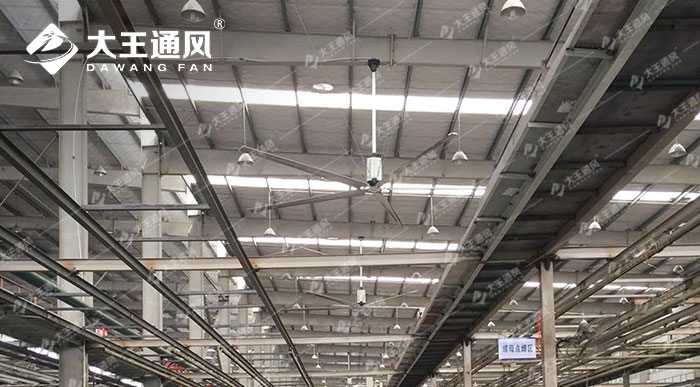
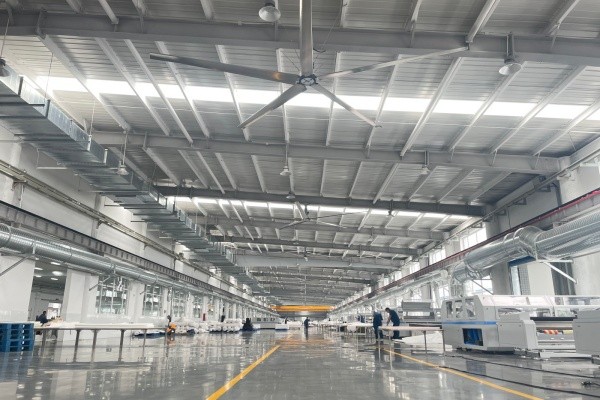
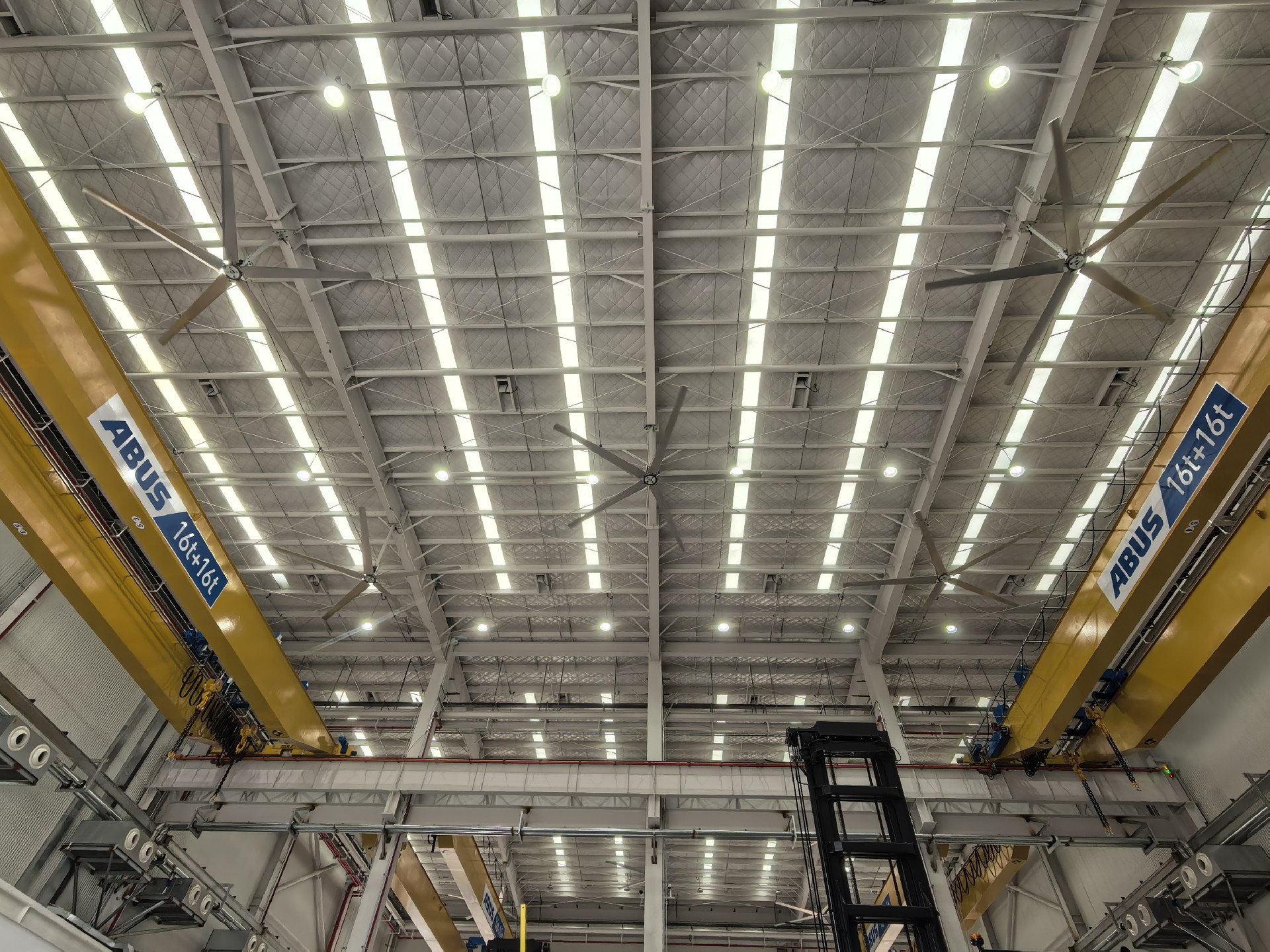
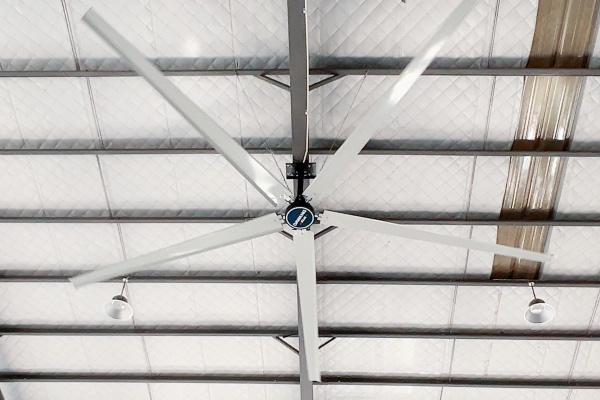
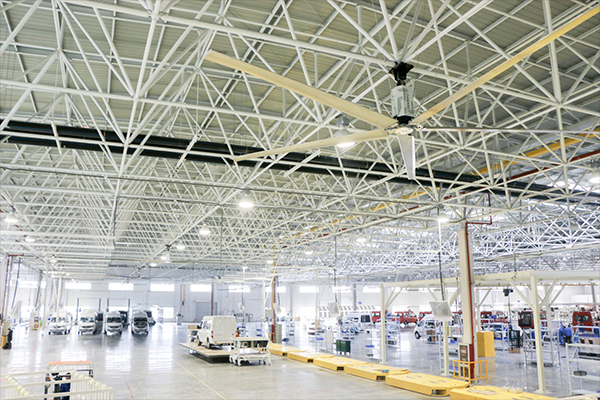
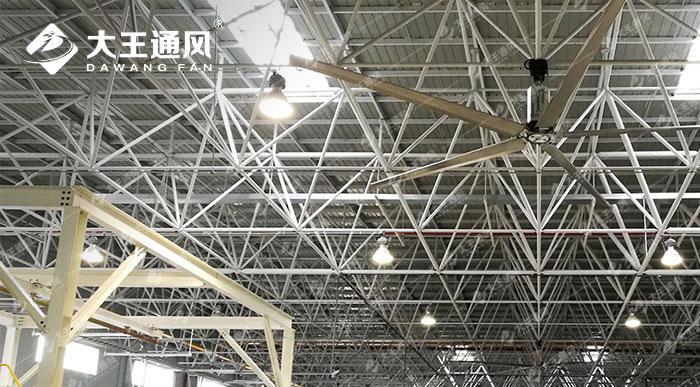
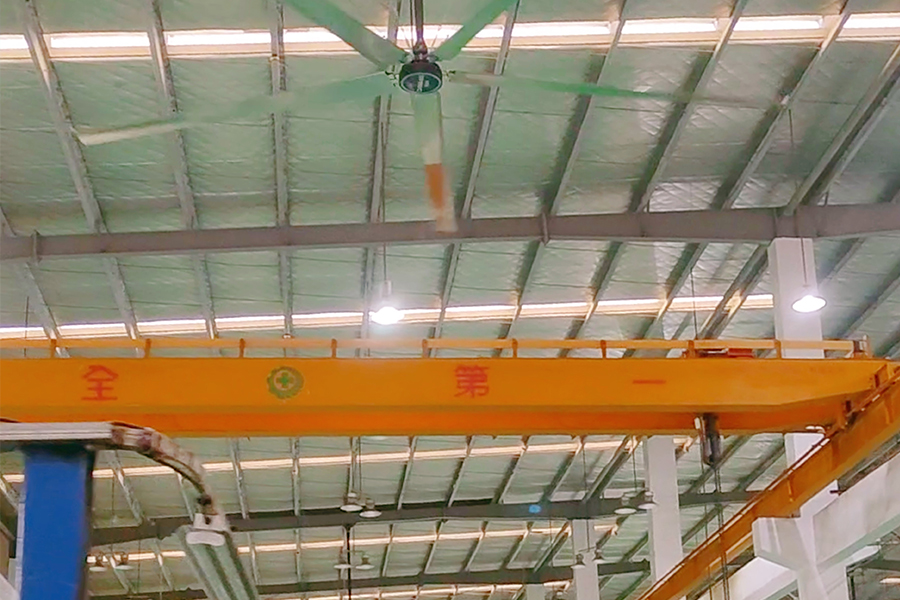
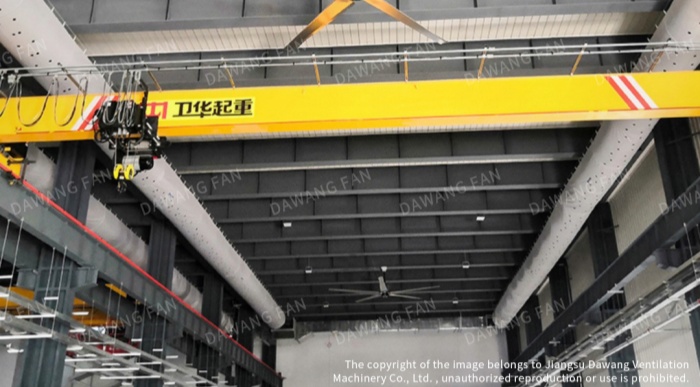
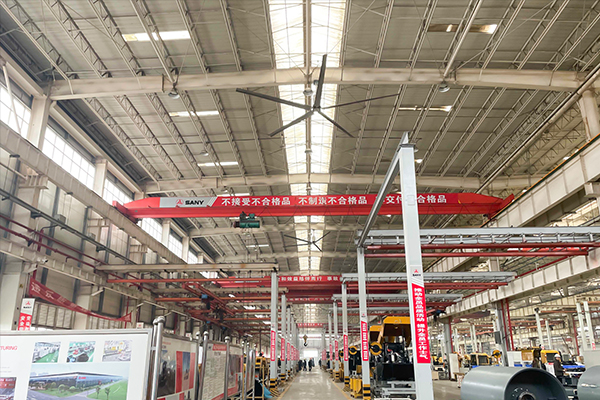
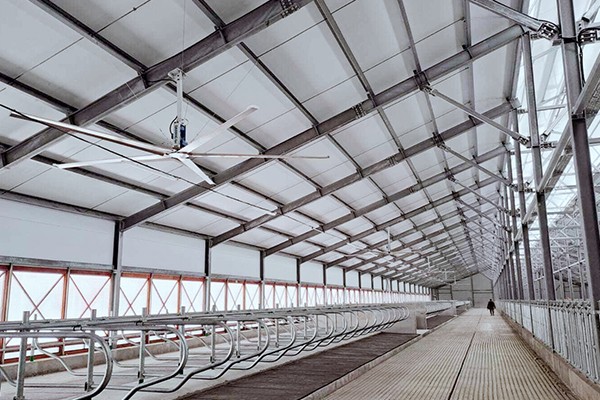
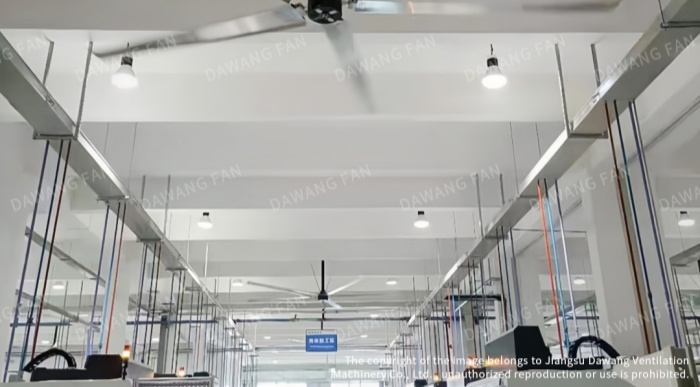
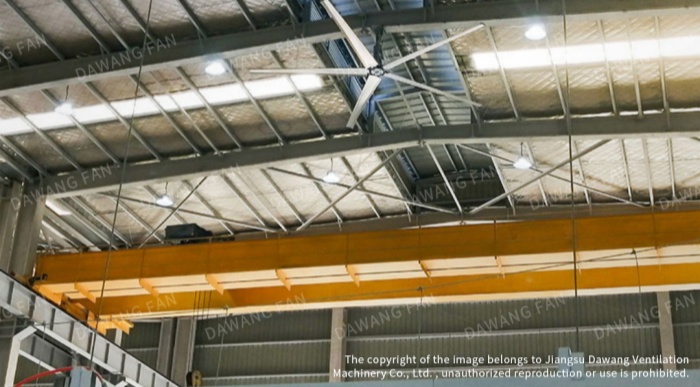
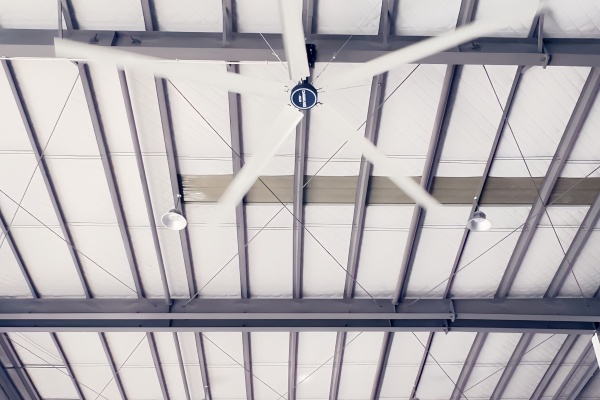
The final configuration includes 10 HVLS fans, each with an 8.5-meter diameter, for a total power of approximately 15 kW. Measured results:
Comparison item Original plan (40 chillers) Current plan (10 HVLS units) Total power Approximately 44 kW Approximately 15 kW Perceived temperature drop Prominent locally, weak distally. Across the region, 5–8°C. Maintenance volume Regular maintenance of the wet curtain, water lines, and water tank. Maintenance-free; only routine inspections are required. Humidity impact Increase indoor humidity No humidification; airflow removes moisture. Seasonal adaptation Available only in summer. All-season use
III. Applicable Scope of Several Types of Equipment
Device Type Applicable Scenarios Not applicable HVLS large fan Ceiling height of 4.5 m or greater, requiring full‑area airflow while also addressing dehumidification and dust control. Process areas requiring constant temperature and humidity Evaporative air cooler Hot and dry regions, open or semi-open spaces, localized supply air at workstations High-humidity areas, enclosed large spaces, moisture-sensitive goods Negative-pressure fan + wet curtain It has a clear exhaust airflow path and can facilitate cross‑ventilation. Confined space, no opposing airflow conditions Central air conditioning Requirements for constant temperature and humidity processes, small-area precision zones Full coverage of large‑area factory buildings (cost too high)
IV. Under what circumstances is it not advisable to use a large fan on its own?
It needs to be made clear: a large fan. Do not lower the room temperature. , it lowers the perceived temperature. The following situations require a combined solution:
The process requires the temperature to be maintained within ±1℃.
The ambient temperature is already above 38°C, and there are strong radiant heat sources (such as near casting operations or kilns);
Workstations where toxic and hazardous gases require targeted capture and treatment.
These three categories should be a combination of “local air conditioning / workstation‑level ventilation + HVLS whole‑space air circulation,” providing a robust overall airflow framework while enabling precise localized treatment with dedicated equipment.
V. Reusable Judgment Order
First, let’s see whether the principle post matches the operating conditions. — Is the humidity high? Is the space enclosed? Is there an exhaust ventilation pathway?
Also calculate coverage and the number of base stations. — Calculated based on floor-to-floor height and shading factors, rather than simply copying the nominal specifications;
Finally, calculate the total lifecycle cost. — Equipment + installation + electricity costs + maintenance + service life, allocated to each square meter per year.
The value of equipment replacement lies not in “which is more powerful,” but in first determining which operating principle best suits the specific service conditions. The willingness to conduct secondary optimization based on real‑world usage feedback itself constitutes a mature management decision.