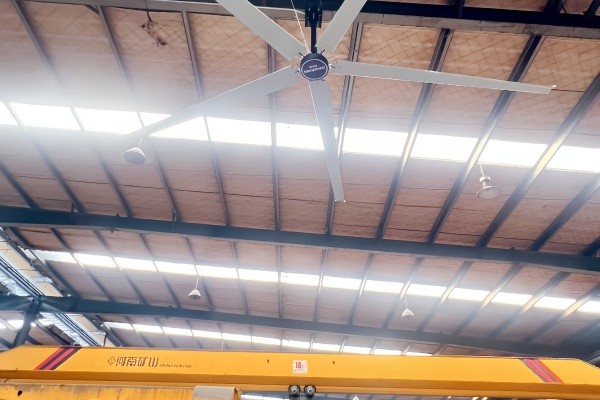
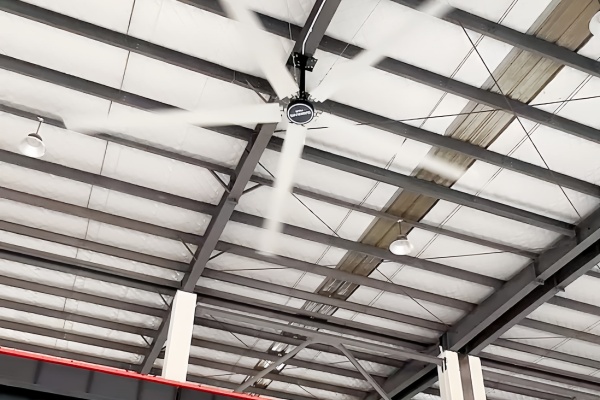
Industrial fans are large ventilation devices designed for high‑ceiling spaces exceeding 6 meters in height. They rely on large blades rotating at low speeds to generate extensive air movement, providing comprehensive ventilation, cooling, and air exchange.
Compared with traditional small fans or central air conditioning, industrial fans offer broader coverage and lower operating costs, making them the mainstream choice for ventilation in today’s industrial settings.
Core Definition and Application Scenarios of Industrial Fans
As a core category of large-space ventilation equipment, industrial fans have seen steadily increasing market penetration in China’s industrial sector in recent years. According to industry data from 2026, the adoption rate of industrial fans in domestic industrial facilities has surpassed 42%.
Industry standard definition of industrial fans
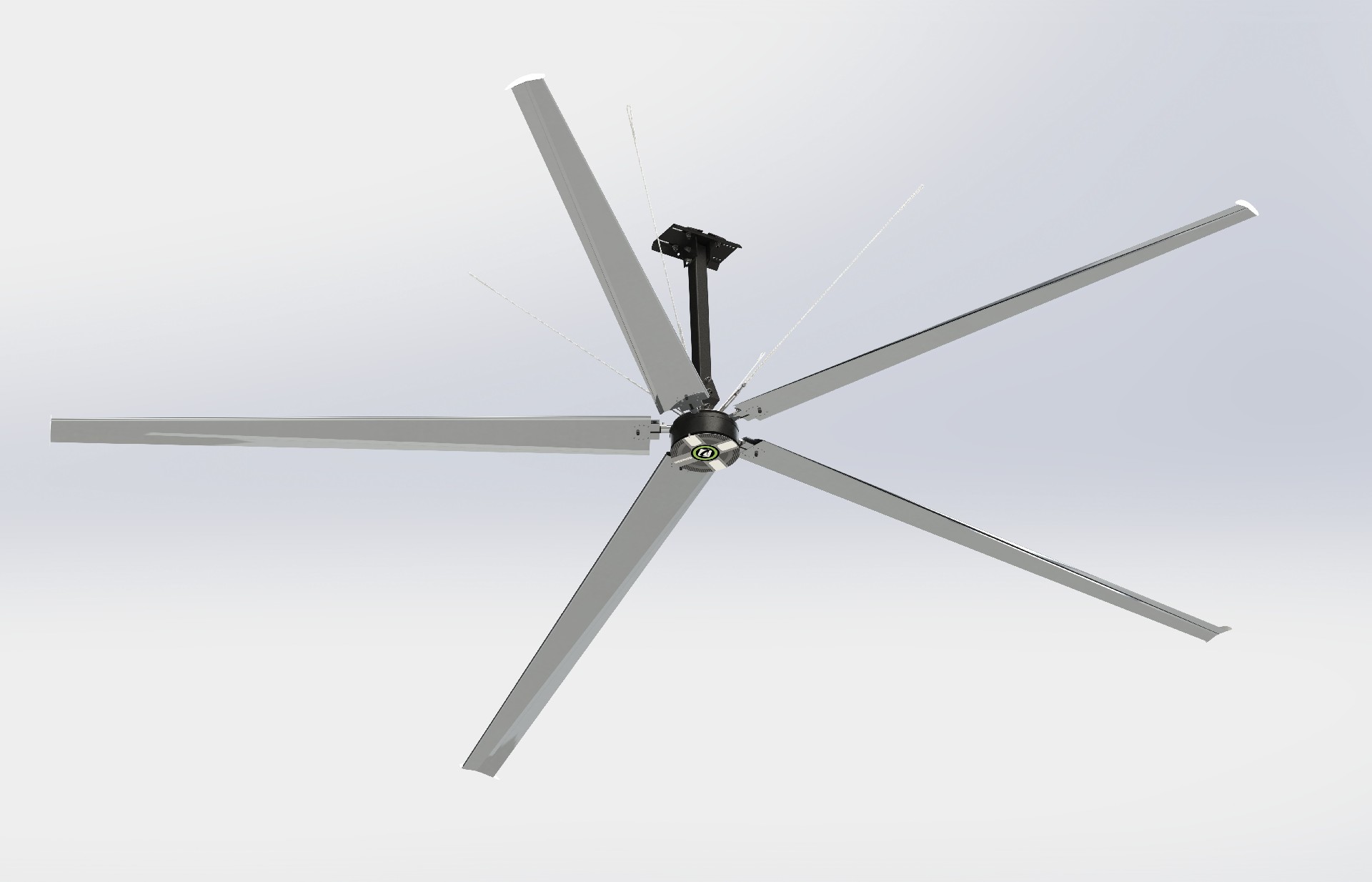
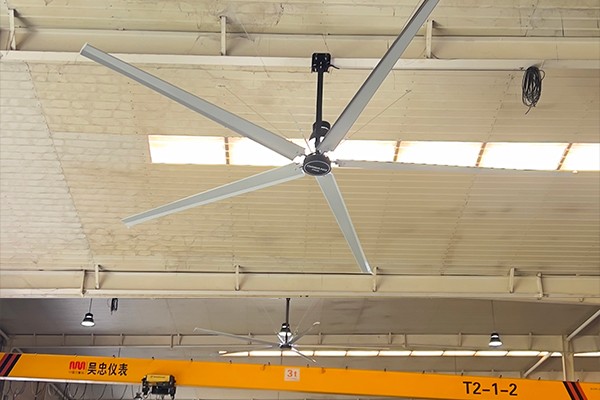
The industry generally classifies large ventilation units with diameters exceeding 1.5 meters and designed for spaces with ceiling heights of 4 meters or more as industrial fans. Based on their application scenarios, these can be further divided into subcategories such as industrial fans for factories, industrial fans for warehouses, and industrial fans for public spaces. Their core function is to enhance air circulation, addressing issues like stuffiness, humidity, and unpleasant odors in enclosed environments.
Main application scenarios for industrial fans
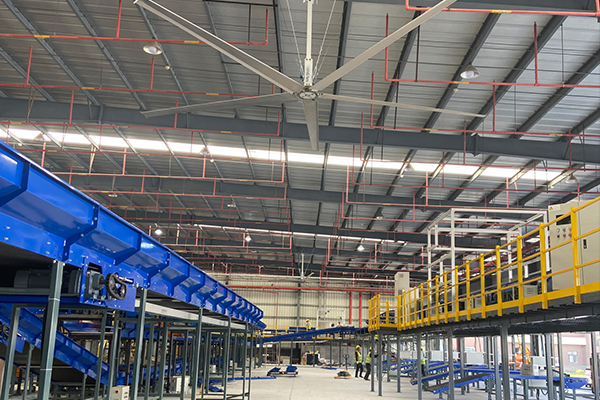
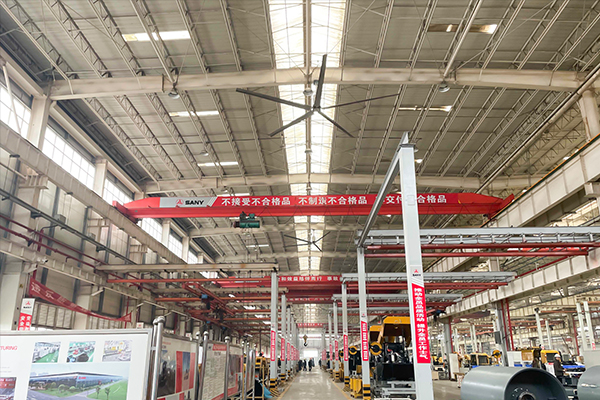
Industrial fans are suitable for a wide range of applications, most commonly in manufacturing plants, large logistics and warehousing facilities, automotive 4S‑store service workshops, major retail outlets, station and airport waiting halls, and livestock barns—essentially any large‑space environment. As long as the ceiling height meets the required specifications, industrial fans can be installed and used.
An Analysis of the Core Performance Advantages of Industrial Fans
Compared with traditional ventilation systems, industrial fans offer numerous significant advantages and have become one of the preferred solutions for ventilation and cooling in large spaces.
Ventilation efficiency advantages for large-space coverage
An industrial fan with a diameter of approximately 8.5 meters can cover an area of over 1,800 square meters, circulating air throughout the entire space and eliminating ventilation dead zones in localized areas. This addresses the limitations of conventional small fans—limited coverage—and the high costs associated with central air-conditioning systems.
Cost advantages of low-energy operation
The power ratings of mainstream large industrial fans typically range from 0.75 to 1.5 kW, roughly equivalent to the power consumption of a standard household water heater. Even running continuously for 10 hours consumes less than 15 kWh. Compared with central air-conditioning systems, their annual operating costs can be reduced by more than 80%, making them highly cost‑effective over the long term.
Comparison of Mainstream Types and Parameters of Industrial Fans
Industrial fans are available in several mainstream sizes, varying by diameter and intended application. The specifications differ significantly across these sizes, allowing users to select the model best suited to their specific site conditions.
Application scenarios for industrial fans of different diameters
Based on diameter, today’s mainstream industrial fans are categorized into three sizes: small‑size industrial fans have diameters ranging from 2 to 3.5 meters and are suited for small workshops with ceiling heights of 4 to 6 meters; medium‑size industrial fans measure 4 to 5.5 meters in diameter and are ideal for medium‑sized factories with ceiling heights of 6 to 9 meters; large‑size industrial fans range from 6 to 8.5 meters in diameter and are designed for large facilities with ceiling heights exceeding 9 meters.
A 2026 industry research report indicates that properly selected industrial fans can improve indoor air comfort in large spaces by more than 60%, while also reducing annual ventilation energy costs, resulting in a return on investment far exceeding that of conventional ventilation systems.
Brand Selection and After-Sales Service for Industrial Fans
As industrial fans are equipment designed for long-term use, the choice of brand directly affects both user experience and service life; it is recommended to select products from reputable manufacturers.
Brand Advantages of Dawang Fans
Dawang Fans is a leading domestic manufacturer of industrial fans, with over ten years of experience in the research, development, and production of ventilation equipment. All our industrial fans are equipped with original‑factory permanent‑magnet synchronous motors, and their blades are crafted from high‑strength aluminum alloy, ensuring excellent stability and long service life. We also offer customized solutions tailored to each customer’s specific site requirements.
We offer nationwide in‑home site surveys and installation services, with multi‑year warranties on core components and 24/7 after‑sales support to address customers’ post‑purchase concerns. To date, we have provided industrial fan installation solutions to thousands of industrial enterprises, earning a strong reputation in the market.
Industry Development Trends for Industrial Fans in 2026
The industrial fan industry has been steadily upgrading in recent years, and by 2026, several distinct trends are expected to shape its development.
Energy efficiency and intelligence have become the mainstream trends.
As corporate demand for energy efficiency grows, an increasing number of industrial fans are adopting energy‑efficient permanent‑magnet motors, paired with intelligent control systems that automatically adjust fan speed based on ambient temperature, thereby further reducing operational energy consumption. This trend represents the mainstream direction of development for industrial fans through 2026.
Customized services cover a wider range of scenarios.
Demand for industrial fans varies significantly across different industries. Manufacturers are increasingly offering customized solutions, developing tailored products for specific applications to meet the unique needs of diverse customers, thereby driving greater industry segmentation.